
Exploring the ancient history of BDSM reveals a rich tapestry of human sexuality and power dynamics, deeply intertwined with cultural, religious, and societal norms. From the earliest written erotica to the sacred rituals of antiquity, and through the secret desires of medieval times to the cultural exchanges of the New World, BDSM has been a significant yet often misunderstood aspect of human history. This article delves into the origins and evolution of BDSM, tracing its journey from the dawn of civilization to its place in modern society.
Key Takeaways
- BDSM themes have been present in human culture for nearly 12,000 years, with some of the first written stories from ancient times depicting elements of bondage, discipline, dominance, submission, sadism, and masochism.
- Ancient deities and rituals played a significant role in the early manifestations of BDSM, often symbolizing the sacred nature of these practices and their connection to religious and cultural expressions.
- Classical antiquity, particularly in Ancient Greece and Rome, saw BDSM practices such as flagellation become integrated into society, with locations like the Tomb of Flogging indicating a normalized approach to such activities.
- Throughout history, BDSM has experienced varying levels of stigma and acceptance, reflecting broader societal attitudes towards sexuality and power dynamics.
- The evolution of BDSM in the New World, influenced by figures like Charles Guyette and the growth of the underground scene, highlights the cultural exchange and adaptation of kink across different societies.
Origins and Early Manifestations

The Dawn of Written Erotica
The inception of writing marked a pivotal moment in human history, and among the earliest narratives were those that explored erotic themes and the dynamics of sexual arousal. These ancient texts were not merely for titillation; they served as a reflection of the societies from which they emerged, often intertwining sexuality with spirituality and power structures.
The exploration of eroticism in ancient literature reveals a sophisticated understanding of human desire and its intricate connection to societal norms.
The first records of BDSM-like practices can be traced back to these formative writings, where the interplay of dominance and submission was not only present but celebrated in myth and folklore. This early erotica laid the groundwork for the complex tapestry of BDSM culture that would evolve over millennia.
- The First Records of BDSM: Often involved deities, indicating a divine aspect to these practices.
- Themes of Power and Surreignty: Reflected in the portrayal of gods and goddesses.
- Erotic Storytelling: A tool for passing down traditions and taboos related to sexuality.
While the specifics of these ancient practices remain shrouded in mystery, the echoes of their influence are still discernible in modern BDSM play, emphasizing safety, communication, and trust between partners.
Deities and Devotion in Early BDSM
The veneration of deities in ancient times often intertwined with practices that are now seen as the precursors of BDSM. The goddess Inanna, revered for her connection to passion and fertility, featured prominently in these early manifestations. Rituals dedicated to her and other deities involved elements of domination, submission, and a ritualistic reverence that underscored the sacred nature of these acts.
The sacredness of BDSM practices in ancient times reflects a deep-seated reverence for the power dynamics and the transformative potential of these rituals.
While the term ‘bdsm originated in 1969’, the essence of what it represents can be traced back thousands of years. The priestess, serving as the conduit for the goddess, would often engage in acts that symbolized the divine interplay of power and vulnerability. These ancient rituals can be seen as a direct precursor of bdsm, laying the foundational ethos that would evolve over millennia.
- Goddess worship and associated rituals
- Priestess as the embodiment of the divine
- Ritualistic acts symbolizing power dynamics
- The sacred nature of BDSM practices
The historical tapestry of BDSM is rich with the threads of devotion and worship, revealing a complex interplay between sexuality, spirituality, and power that has been woven into human culture since the dawn of civilization.
Mesopotamia: The Cradle of Kink
Ancient Mesopotamia, located in what is now the Middle East near Iraq, is recognized as one of the earliest societies where BDSM practices were recorded. These early manifestations of kink are intertwined with the worship of deities such as Inanna, a goddess whose rituals included elements of domination and submission.
The reverence for Inanna not only highlights the spiritual dimension of early BDSM but also reflects the complex interplay between sexuality, power, and religion in Mesopotamian culture.
The initiation rites and ceremonies dedicated to Inanna often involved acts that induced a blend of pain and pleasure, signifying a journey into altered states of consciousness and a deeper connection with the divine. This sacred aspect of BDSM in Mesopotamia was closely linked to themes of fertility and the cycle of life and death.
While the ancient city-states of Mesopotamia eventually fell, the foundational elements of BDSM they cultivated continued to influence later cultures. The kama sutra, a text from a much later period, also contains references to behaviors that echo the kinks of Mesopotamia, suggesting a long-standing human fascination with the dynamics of control and eroticism.
BDSM in Classical Antiquity

Flagellation and Fervor in Ancient Greece
The practice of flagellation was not merely a form of punishment in ancient Greece; it was deeply embedded in the religious and cultural fabric of society. In Sparta, the ritual known as diamastigosis involved the whipping of young men at the altar of Artemis Orthia. This rite of passage was a testament to endurance and devotion, often leading to a state of frenzy and arousal among participants.
By the fifth century, these practices had evolved into a form of gratification that transcended mere physical endurance. The Tomb of Flogging, dedicated to Dionysus, became a sanctuary for those seeking pleasure through pain. The dichotomy of suffering and pleasure in these rituals highlights the complex nature of human sexuality and power dynamics that were prevalent in ancient Greece and Rome.
The intertwining of pain and pleasure in religious rites and erotic contexts suggests a sophisticated understanding of human psychology and desire.
While the historical record provides glimpses into these practices, the full extent of their influence on modern BDSM culture remains a subject of fascination and scholarly inquiry.
Rome: Discipline and Decadence
In the opulent and permissive society of ancient Rome, the practices of bondage and discipline were not merely for the fringes but part of a broader cultural phenomenon. The ancient Romans, much like their Greek predecessors, engaged in what we might now refer to as BDSM activities, with a particular penchant for the dynamics of power and control. These practices were often intertwined with religious and social rituals, indicating a complex relationship with sexuality and authority.
The term ‘BDSM’ itself, an acronym for bondage and discipline, domination and submission, and sadism and masochism, would not be coined until centuries later. However, the seeds of these dynamics can be seen in the historical accounts and artistic depictions of the time. Anne O. Nomis, in her seminal work, highlights the existence of figures akin to the modern dominatrix, suggesting a structured approach to these power exchange rituals.
- The Marquis de Sade, much later, would become infamous for his writings that explored the darker, more sadistic aspects of sexual pleasure.
- Punished for pleasure, individuals sought out experiences that blurred the lines between pain and pleasure, dominance and submission.
The interplay of decadence and discipline in Roman society provided a fertile ground for what would evolve into the complex tapestry of BDSM practices we recognize today.
Rituals and Respect: The Sacred Side of BDSM
The sacred nature of BDSM practices was evident in ancient times, where such acts were not merely for pleasure but held a ritualistic significance. Whipping, for instance, was not just a form of discipline but a rite dedicated to deities, reflecting the profound respect for these practices.
BDSM was taken very seriously in the past, often seen as sacred and ritualistic, especially forms like whipping, which were associated with gods and goddesses.
The structured nature of BDSM-like practices also demanded a high level of consent and understanding among participants, much like the sutra texts that detailed sexual acts with precision and care. This early form of negotiation and agreement mirrors the modern concept of ‘safe, sane, and consensual’ that is central to BDSM etiquette today.
- Consent and negotiation: Essential for a respectful and safe experience.
- Ritualistic significance: Acts dedicated to deities, such as those dedicated to Dionysus.
- Sutra texts: Ancient documentation of sexual acts and practices.
- Modern parallels: Today’s BDSM practices continue to emphasize respect and safewords.
Medieval and Renaissance Undercurrents

Courtly Love and Secret Desires
The Medieval period witnessed a unique intertwining of chivalry and romantic desire, often expressed through the lens of courtly love. This idealized form of love, while ostensibly chaste, concealed layers of eroticism and power dynamics that can be seen as a precursor to modern BDSM practices. The clandestine nature of these desires often found expression in the literature and art of the time, hinting at a subculture of kink amidst the rigidity of feudal societies.
One such literary work that reflects the era’s complex relationship with eroticism is Petronius’s Satyricon. Although not a product of the Medieval period, its influence extended into the villas and courts of the time, where its tales of decadence and sexual exploits resonated with the secret yearnings of the nobility.
The exploration of power dynamics in the context of courtly love provided a socially acceptable outlet for erotic expression, which was otherwise constrained by the moral and religious frameworks of the era.
The following list outlines key aspects of courtly love that align with BDSM themes:
- The veneration of the ‘dominant’ figure, often a lady of higher social standing.
- Ritualized forms of worship and obedience, echoing the dynamics of D/s relationships.
- Secret codes and languages developed to express forbidden desires.
- The use of symbolic tokens and gifts, akin to collars or other BDSM signifiers.
The Tomb of Flogging: A Glimpse into Ancient Practices
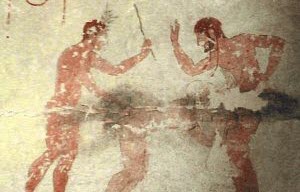
The ancient world harbored various practices that resonate with what we now recognize as BDSM. Among the most intriguing is the discovery of the Etruscan Tomb of the Whipping. This site, dating back to the 5th century BC, provides a vivid tableau of the erotic dimensions of flogging. Within its walls, frescoes depict scenes where individuals engage in the act of flagellation as a form of pleasure.
The tomb, dedicated to Dionysus, suggests a ritualistic aspect to these practices, where pain and pleasure intersected in a dance of dominance and submission.
While the tomb itself is a silent witness to these ancient rituals, the artifacts and imagery left behind speak volumes. The Etruscan society, known for its complex relationship with the afterlife, may have viewed the acts depicted within the tomb as a means to transcend the mundane through the ecstasy of pain.
- Location: Etruscan Tomb of the Whipping
- Period: 5th century BC
- Deity: Dionysus
- Activity: Erotic flagellation
The practice of flogging within an erotic context has been documented across various cultures and time periods, but the tomb offers a unique glimpse into how these acts were intertwined with the spiritual and social fabric of the time.
The Transition to Modern BDSM
As the Renaissance gave way to the Enlightenment, the undercurrents of BDSM began to surface more prominently, setting the stage for modern bdsm. The 18th century’s categorization of sexual behavior marked a pivotal shift, with BDSM practices gradually emerging from the shadows of society. This transition was not just a change in visibility but also in understanding and acceptance.
The components of BDSM – bondage and discipline, dominance and submission, sadism and masochism – have long been intertwined with human sexuality. The role of the submissive has evolved significantly, from a position often associated with non-consensual power dynamics to one of mutual respect and desire in contemporary BDSM relationships.
The internet has played a crucial role in the dissemination of BDSM culture, allowing for a global conversation and exchange of ideas. It has also been instrumental in normalizing what was once considered taboo, providing a platform for education and community building.
The following table outlines the basic aspects of BDSM and their roles:
| Aspect | Role Description |
|---|---|
| B&D | Bondage and discipline |
| D&s | Dominance and submission |
| S&M | Sadism and masochism |
Introduction to BDSM for newbie couples is essential, emphasizing the importance of communication, safety, and aftercare. Slow, consensual exploration is key for a fun and fulfilling experience.
BDSM in the New World

Cultural Exchange and the Evolution of Kink
The intermingling of cultures brought about a unique evolution in the bdsm culture, particularly as it assimilated into western culture throughout the twentieth century. The culture of bdsm, once a fringe element, began to permeate mainstream consciousness, leading to the formation of a distinct bdsm subculture. This subculture was not just a substitute for sex but a complex array of practices, beliefs, and expressions of personal and collective identity.
- The internet’s rise in the late 20th century provided a platform for the dissemination and discussion of kinky interests.
- Literature and media began to reflect and shape the culture of bdsm, with works ranging from underground publications to mainstream movies.
- Social and legal changes led to a gradual destigmatization of bdsm practices, though challenges remained.
The transformation of once-feared instruments of torture into sources of pleasure is a testament to the dynamic nature of human sexuality and the adaptability of bdsm practices within modern society.
As the culture throughout the twentieth century evolved, so did the understanding and acceptance of kink. The bdsm subculture thrived on the fringes, creating safe spaces for exploration and expression, and challenging the norms of traditional sexual relationships.
American Fetish and the Influence of Charles Guyette
The American contribution to the landscape of bondage and fetishism was significantly shaped by Charles Guyette, the first in the nation to produce and distribute fetish-related materials. His legacy is a testament to the burgeoning American fetish scene that began to take shape in the early 20th century.
Guyette’s influence extended beyond mere distribution; he was a pioneer who laid the groundwork for a culture that would later be epitomized by figures such as Irving Klaw and iconic models like Bettie Page. The materials and accessories provided by Guyette were not just products but symbols of a subculture emerging into the public eye.
The evolution of fetish in America can be traced back to the efforts of individuals who dared to commercialize the taboo.
The following list highlights key contributions of Charles Guyette to the American fetish scene:
- First to produce and distribute fetish-related material in the U.S.
- Successor to Irving Klaw, who expanded the BDSM theme in film and photography
- Influenced artists like John Willie, Gene Bilbrew, and Eric Stanton, who shaped the visual culture of fetishism
The Underground Scene and Its Growth
As the bdsm community grew, the once clandestine subculture began to flourish in the light of greater acceptance. The underground scene, a term synonymous with the community itself, saw an increase in public play parties and clubs, where scenes were no longer just private affairs but spectacles to be appreciated by an audience. This shift not only brought about a new level of visibility but also fostered a sense of safety and camaraderie among participants.
The growth of the scene was marked by a diversification of interests and practices, reflecting the unique tapestry of individual desires and expressions within the community.
For those new to the scene or curious about its intricacies, one might try searching online for resources. A plethora of information is available, ranging from educational articles to forums where one can connect with like-minded individuals. Here’s a snapshot of what you might find:
- Website page offers resources on swingers, hotwife, kink, BDSM, polyamory, relationships, and dating.
- Features articles on BDSM on a budget, psychological bondage, and kink exploration.
Understanding BDSM Through History

The Stigma and Its Fluctuations
The history of BDSM is rife with misconceptions and societal stigma. This stigma has fluctuated over time, often influenced by cultural and legal perspectives. The acronym BDSM itself was coined to create a more inclusive and descriptive term for these practices, yet it did not shield the community from criticism. Critics often claim that BDSM practices are harmful or indicative of psychological issues, despite evidence to the contrary.
- The term “masochism” was derived from the name of writer Leopold von Sacher-Masoch, known for his novel depicting these practices. It has since been used to pathologize those who derive pleasure from submission or pain.
- Being a masochist is not inherently problematic; issues arise when individuals face difficulties in their personal or professional lives due to their preferences.
The complexity of BDSM practices and the personal nature of participation mean that stigma can have a profound impact on individuals, leading to stress and the potential for living a burdensome double life.
Understanding and acceptance of BDSM have improved, but the community still faces challenges. The path to destigmatization is ongoing, with education and open dialogue playing key roles.
Sexuality and Power Dynamics Through Time
Understanding the history of BDSM is not merely about acknowledging its existence but also about comprehending the intricate dynamics of power, sexuality, and pleasure that have evolved over time. BDSM, an umbrella term encompassing bondage and discipline, dominance and submission, and sadism and masochism, has been a sexual practice that often reflects the societal norms and power structures of its era.
The practice of BDSM involves a consensual exchange of power where individuals may choose to dominate or be dominated, engaging in sadomasochistic activities for sexual pleasure. This dynamic is not a modern invention but can be traced back to ancient civilizations, where sexual dominance and submission were often interwoven with religious and cultural practices.
By exploring the ancient history of BDSM, we can see how the practice has been influenced by and has influenced the expressions of sexuality and power throughout the ages. The act of engaging in BDSM can be a deeply personal experience, yet it also mirrors the broader shifts in sexual ethics and attitudes towards sadism and masochism.
Those who practice BDSM today are part of a long lineage of individuals who have sought to explore the boundaries of pleasure and pain. The term “sadism” itself, derived from the Marquis de Sade, is a testament to the enduring fascination with the interplay between pain, power, and sexual gratification. As we continue to explore and understand these dynamics, we contribute to the ever-evolving narrative of human sexuality.
The Legacy of BDSM and Its Place in Modern Society
The journey of BDSM through the ages culminates in its current status as a recognized and increasingly normalized aspect of modern sexuality. The once clandestine practices have now found a place in mainstream media, reflecting a broader acceptance and understanding of diverse sexual expressions.
The evolution of BDSM is a testament to the resilience and adaptability of human sexuality. Its integration into society has been gradual but persistent, mirroring the changing attitudes towards sex and intimacy.
The community that has formed around BDSM is not only robust but also supportive, offering a safe space for individuals to explore and express their desires without fear of judgment. This sense of belonging and acceptance is crucial for the continued growth and evolution of BDSM culture.
- Cultural Exchange: The globalization of ideas has played a pivotal role in the spread of BDSM practices.
- Media Representation: Books, movies, and online platforms have been instrumental in demystifying BDSM.
- Community Support: A strong network provides education, safety, and camaraderie.
- Normalization: The shift from taboo to mainstream has been significant over the past decades.
While the path of BDSM through history has been complex, its legacy is clear. It has transformed from a sacred ritual to a form of personal expression, and its place in modern society is now undeniable.
Delve into the intricate tapestry of BDSM’s past and discover how power dynamics, sensual exploration, and personal liberation have evolved over the centuries. Our comprehensive guide, ‘Understanding BDSM Through History,’ offers a captivating journey through the ages. Ready to unlock the secrets of this enigmatic world? Visit our website for an enlightening experience and join a community that celebrates the full spectrum of human desire. Embrace your curiosity—explore with us today.
Frequently Asked Questions
Q: What is the history of BDSM culture?
A: BDSM culture has roots tracing back to ancient times, with practices such as ritual flagellation being common in ancient cultures like those of ancient Greece and Rome.
Q: Who was Marquis de Sade and how did he influence BDSM culture?
A: Marquis de Sade was a French nobleman known for his works that explored themes of sadism and masochism, which had a significant influence on the development of BDSM culture.
Q: How is the Kama Sutra related to BDSM?
A: The Kama Sutra, an ancient Indian text on human sexual behavior, includes references to various forms of sexual pleasure and erotic activities that are sometimes associated with BDSM practices.
Q: When did BDSM culture originate?
A: While BDSM practices have existed in various forms throughout history, the modern BDSM subculture as we know it today originated in the 20th century, particularly gaining recognition in the 1960s.
Q: What are some ancient examples of BDSM-like practices?
A: In ancient Sparta and Rome, there were instances of ritual flagellation and sexual games played in brothels that bear resemblance to certain BDSM activities.
Q: Are there any references to BDSM-like activities in ancient tombs?
A: Indeed, there have been discoveries of ancient tombs, such as the Villa of Mysteries in Pompeii, that depict scenes of people willingly being bound or engaged in erotic practices, suggesting the existence of BDSM-like activities in ancient times.
Q: How has BDSM culture evolved over time?
A: Over the centuries, BDSM culture has evolved from ancient rituals and practices into a modern subculture that emphasizes consent, communication, and exploring diverse forms of sexual expression and pleasure.
Echoes of Desire: Unearthing the Timeless Ties of BDSM
Journey through the ages with us, discovering the deep roots and enduring allure of BDSM practices. In our community, curiosity leads to exploration, connecting past passions with present pleasures. Ignite your adventure through history and desire by signing up for a free SwingTowns account. Together, let’s unveil the mysteries of desire, creating a tapestry of experiences that span time and imagination.
“Swingtown is awesome and we have no complaints. There are tremendous people and wonderful couples on here that we have had the pleasure of meeting” -wearesexy2015


