
It seems like everyone’s got a camera pointed at them these days, or at least, they’ve got one pointed at themselves. We’re living in a time where sharing the details of our lives, big or small, has become totally normal. It’s gone way beyond just posting vacation photos; people are now broadcasting their daily routines, their thoughts, and even their struggles to the whole world. This whole thing, this ‘virtual exhibitionism,’ is really taking off, and it makes you wonder why we’re so drawn to showing off and watching others do the same.
Key Takeaways
- The shift from curated reality TV to raw, 24/7 livestreams has made observing everyday drama more addictive.
- People are motivated to share their lives online by a deep desire for connection, a way to escape mundane jobs, and the potential to earn money.
- Social media gives individuals a sense of control over their self-presentation, allowing them to curate their online identities.
- Constant exposure and the quest for likes can significantly impact self-esteem and how people view themselves.
- The drive to share online often stems from a need for validation and community, especially when real-life connections feel lacking.
The Evolution From Reality TV To Livestreams
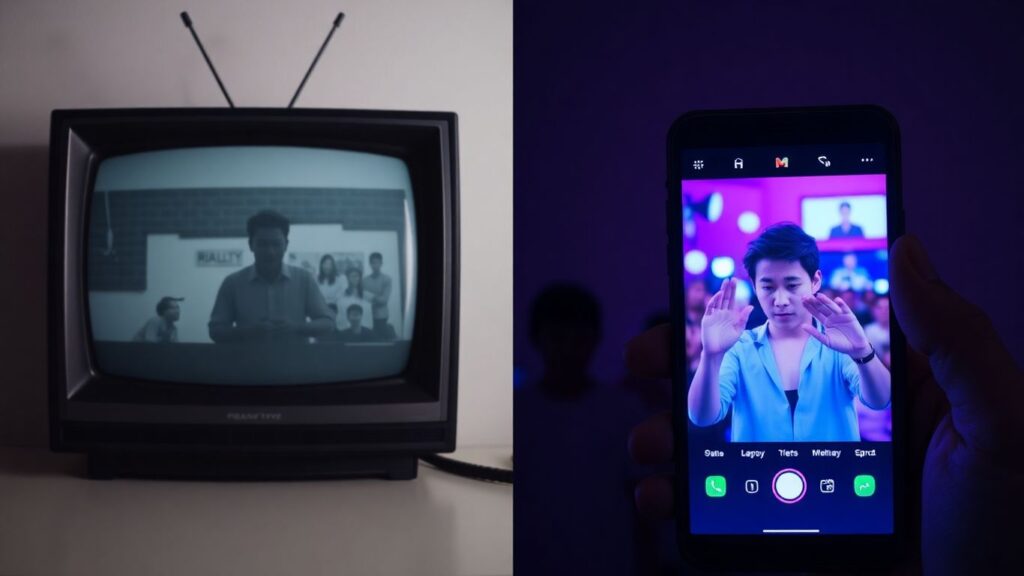
From Soaps to Streams: The Shift in Public Lives
There was a time when people tuned in every week for the next shocking moment from their favorite reality show. Today, that’s changed. Reality TV showed us messy arguments and heartfelt moments, but all carefully stitched together by editors. Now, with the rise of livestreaming, people open the window to their lives in real time—no cuts, no retakes. Instead of a handful of faces picked by networks, anybody with a phone can step into the spotlight.
If you look at the history of lifestreaming, it actually goes back before social media, with strange early experiments in self-broadcasting. For example, early pioneers in the late 1980s started sharing their routines with anyone watching—turning everyday existence into a bit of a “human zoo.” You can read more about how this trend started and what it means in our digital age in this context piece.
The Addictive Nature of Uncut Drama
Unfiltered, unedited live content is like reality TV but with no curtain. Viewers can drop in whenever something dramatic could happen. It’s endless, unpredictable, and oddly comforting. There’s something about knowing every misstep or awkward silence is real. It’s not just that it’s live—it’s also partly the rush of getting to see someone’s actual reactions as events play out.
A few reasons why people get hooked on live content:
- Catching real moments instead of reruns and highlight reels
- The chance to interact directly with streamers while events unfold
- Constant expectation that “anything could happen”
From Voyeurs to Front-Row Guests
People have always liked peeking into others’ private lives. But now, instead of peering in from the shadows, viewers are invited right in. Livestreamers talk to the camera like an old friend, answering questions and reacting to comments, removing the distance between performer and audience. Today’s viewers become participants, not just spectators.
| Aspect | Reality TV | Livestreaming |
|---|---|---|
| Edited? | Yes | No |
| Viewer Interaction | Minimal | High |
| Audience Size | Controlled | Unpredictable |
| Who’s On Screen? | Selected | Anyone |
“Swingtowns.com has been one of the best places for meeting like minded and fun party people. I’m always looking to meet new people and this site never fails.” -PoundnSand
Motivations Behind Digital Showmanship
So, why do people put their lives on full display online? It’s more than just a passing fad; there are some pretty deep-seated reasons driving this trend of digital self-display. Think about it – we’re living in a time where sharing every little detail feels almost normal. This isn’t just about seeking attention; it’s often about trying to find a sense of belonging and purpose in a world that can sometimes feel pretty disconnected.
The Craving for Connection and Transcendence
At its core, a lot of online exhibitionism stems from a basic human need to connect. When real-world communities feel weaker or harder to access, people turn to the internet for that sense of belonging. Sharing personal stories, even the mundane ones, can create a feeling of shared experience with an audience. It’s like saying, “Hey, I’m here, and I’m going through this too.” This can offer a kind of transcendence, a way to rise above the everyday grind and feel like you’re part of something bigger. It’s a way to feel seen and heard when you might not feel that way offline.
Monetizing Minutiae Through Ad Revenue
Let’s be real, for many, there’s a financial incentive. The internet has opened up new avenues for making money, and for some, that means turning their daily lives into content. Think about influencers or streamers; they build an audience by sharing their experiences, and that audience can be monetized through ads, sponsorships, and donations. It’s a modern take on entrepreneurship, where your personal life becomes the product. This pursuit of income can be a powerful motivator for constant digital self-display, turning even the smallest moments into potential revenue streams.
The ‘Big Fish Little Pond’ Effect Online
There’s also a psychological aspect at play, often described as the ‘big fish little pond’ effect. Online, individuals can find a niche where they feel significant and admired, even if that audience is relatively small compared to the global population. This perceived superiority within a specific online community can be a strong driver for continued exhibitionism. It’s about controlling the narrative and the perception others have of you. You get to decide what parts of your life are visible, creating a curated version of yourself that garners positive attention and validation. This control over what is shown, and when, is a key part of the thrill.
“We have met so many nice people since joining swingtowns. Only positive things.” -Honeybeee
Control and Curation in Self-Exposure
It’s easy to think of online sharing as just a free-for-all, but there’s a lot more strategy involved than people often admit. When you’re putting yourself out there on social media, you’re not just randomly tossing bits of your life into the void. You’re actually in the driver’s seat, deciding what gets seen, when, and by whom. This isn’t just about hiding the messy bits; it’s about actively shaping a narrative. The real thrill comes from this deliberate exposure, the power to control your own image.
The Thrill of Deliberate Exposure
Think about it: it’s not really exhibitionism unless you mean to show someone something. Online, this control is amplified. You can choose to highlight your successes, your best moments, or that perfectly curated vacation photo. You get to decide who sees what – maybe your close friends see your unfiltered rants, while your professional network only sees your career wins. This selective sharing is a powerful tool for managing how others perceive you. It’s like being the director of your own personal movie, and you get final cut.
Social Media’s Control Over Visibility
Platforms themselves play a huge role here. They give us the tools to manage our privacy settings, to block certain people, or to create different circles of friends. This means we can carefully control the flow of information. We can choose to be more open with some audiences and more reserved with others. It’s a constant balancing act, deciding how much of ourselves to reveal and to whom. This ability to customize our digital presence is a big part of why people feel comfortable sharing more than they might have in the past.
Data as an Object Versus a Relational Variable
Here’s where it gets a bit more technical, but it’s important. When your personal information or photos are just sitting there, like an object, you generally feel in control. You can decide to share it or not. But things get tricky when that data starts to act like a relational variable. This happens when your posts are designed to get a reaction, to spark a conversation, or to build a following. Once your data is actively provoking a response from an audience, it shifts from being a simple document of your life to something with living significance. That’s when you start to lose some of that control, because the audience’s reaction becomes a part of the equation, and you can’t always predict or manage that.
Social Media’s Impact on Identity and Self-Esteem
It’s wild how much these platforms mess with how we see ourselves, right? We’re constantly curating this online persona performance, picking and choosing what bits of our lives to show the world. It’s not just about sharing anymore; it’s about crafting a version of ourselves that we think others will like, or even envy. This whole social media oversharing thing can really blur the lines between who we actually are and the highlight reel we present.
Shaping Identity Through Digital Representations
Think about it. Every photo you post, every status update, every story you share is a brushstroke on the canvas of your digital identity. You’re not just living your life; you’re documenting it, often with a specific narrative in mind. This constant self-documentation can start to feel more real than your actual experiences. It’s like you’re performing for an audience, even when you’re just hanging out at home. The pressure to appear a certain way – happy, successful, adventurous – can be intense. We start to internalize these digital representations, and they can actually start to shape our real-world identity.
The Trade-offs of Visible Stardom
Being visible online, even on a small scale, comes with its own set of challenges. While getting likes and comments can feel good, it also opens you up to judgment. People will comment on your looks, your choices, your life. It’s a trade-off: you get attention, but you also invite scrutiny. This constant feedback loop can be exhausting. It makes you wonder if you’re doing enough, if you’re good enough, if your life is interesting enough.
Here’s a quick look at how that visibility can play out:
- Positive Reinforcement: Likes, shares, and positive comments can boost your mood and make you feel good about yourself.
- Negative Scrutiny: Unkind comments or criticism can really sting and affect your self-worth.
- Comparison Trap: Seeing others’ seemingly perfect lives can lead to feelings of inadequacy.
“This site has been super fun. Would highly recommend for all players :)” -coltpl4y
Building Reputation Through Self-Display
In a way, social media has become a new kind of resume or portfolio. How you present yourself online can influence how people perceive you in real life, whether it’s for jobs, friendships, or even romantic relationships. This self-display isn’t always about vanity; sometimes it’s a strategic move to build a certain reputation or brand. You might carefully curate your posts to showcase your skills, your interests, or your personality, hoping to attract opportunities or like-minded people. It’s a way of taking control of your narrative, but it also means you’re constantly on display, and that can be a lot to manage.
The Quest for Validation and Community
It’s a funny thing, isn’t it? We put ourselves out there, sharing bits and pieces of our lives, and we wait. We wait for those little red hearts, those thumbs-ups, those comments that say, “I see you.” It’s like a constant, low-level hum of needing to be acknowledged. This craving for validation is a huge driver behind why so many of us become digital show-offs. We’re looking for that feeling of being special, of being noticed in a world that can sometimes feel overwhelmingly large and impersonal.
Feeling Special Through Watchful Eyes
There’s a definite buzz when you see your follower count tick up, or when a post gets more engagement than usual. It’s like a little hit of dopamine, a confirmation that what you’re doing, what you’re sharing, matters to someone. It makes you feel seen, and in a way, special. Even if the reasons people watch are sometimes more about relatability than actual uniqueness, that attention still feels good. It’s a way to feel important, even if it’s just to a bunch of avatars on a screen.
The Illusion of Intimacy Through Screens
We scroll through feeds, watching people’s highlight reels, their daily struggles, their mundane moments. It starts to feel like we know them, right? We see their breakfast, their workout routines, their rants about traffic. This illusion of intimacy is powerful. It fills a gap, especially when real-life connections feel a bit thin. It’s easier to feel connected to a hundred people online than to schedule a coffee date with one friend sometimes. It’s not the same as a real hug, obviously, but it’s something.
Filling Voids Left by Disconnected Communities
Let’s be honest, a lot of us don’t have the tight-knit communities our grandparents might have had. Neighborhoods aren’t always what they used to be, and busy lives mean we don’t always connect with people in person as much. So, where do we turn? Online, of course. We find our tribes, our people, through shared interests, shared struggles, or just shared humor. Broadcasting our lives, our thoughts, our vulnerabilities, becomes a way to find belonging when those real-world connections are harder to come by. It’s like saying, “Hey, I’m here, does anyone else feel this way?” And when people respond, it feels like finding a little piece of home.
Monetizing Vulnerability and the Pursuit of Fame
It’s wild how sharing your deepest, messiest moments can actually make you money now. Forget the 9-to-5 grind; for some, turning personal struggles into content is the new career path. This isn’t just about getting a few likes; it’s about building a brand, attracting followers, and, yes, making a living. The potential for significant reward, both emotionally and financially, is tied directly to how much of yourself you’re willing to put out there.
The Potential for Great Reward Through Vulnerability
Think about it: people are drawn to authenticity, even when it’s painful. When someone shares their struggles with mental health, financial hardship, or relationship drama, it creates a connection. Viewers see themselves in those stories and feel less alone. This shared experience can translate into real support, whether through direct donations, subscriptions, or brand partnerships. It’s a modern twist on the age-old idea that sharing your burdens makes them lighter, but now, it can also fill your wallet.
From Dead-End Jobs to Becoming Your Own Media Company
We’re seeing a shift where individuals are bypassing traditional gatekeepers. Instead of waiting for a lucky break, people are creating their own platforms. A person might start by vlogging about their difficult job, their struggles with debt, or a personal crisis. As their audience grows, they become their own media company. They control the narrative, the production, and the monetization. It’s a powerful transformation, moving from feeling stuck in a dead-end situation to being the boss of your own digital empire. This path offers a sense of agency that many traditional jobs just can’t match.
The Rush of Lights and Lenses Over Drudgery
Let’s be honest, the daily grind can be soul-crushing. For many, the idea of trading that monotony for the excitement of being seen, heard, and appreciated is incredibly appealing. The constant engagement – the comments, the shares, the feeling of being watched – can be intoxicating. It’s a different kind of validation than you get from a paycheck. While the work might still be demanding, the perceived payoff, the thrill of the spotlight, often feels more rewarding than the quiet desperation of everyday labor. It’s a trade-off many are willing to make, chasing that feeling of being special in a world that often feels indifferent.
Ethical Considerations and Future Trajectories
The Blurring Lines of Privacy and Transparency
So, we’ve talked a lot about why people put themselves out there online, but what about the flip side? It gets a bit murky when we think about privacy versus just being open. On one hand, transparency feels good, especially when you see politicians or companies being upfront about things. But does that same openness make sense for everyday folks when the line between what’s private and what’s public just keeps fading? It’s like we’re all on a stage now, and figuring out where the curtains should be is getting harder. The constant push for more openness online is forcing us to rethink what personal boundaries even mean. It’s a tricky balance, and honestly, I don’t think anyone has all the answers yet. We’re all kind of figuring it out as we go along, aren’t we?
The Role of Spectators in the Exhibitionist Phenomenon
It’s easy to point fingers at the people sharing their lives, but what about us, the ones watching? We’re not just passive viewers; we’re part of this whole digital show-off thing. Our clicks, likes, and comments fuel the fire. When we crave that constant stream of content, we’re essentially asking for more. It’s a bit of a feedback loop. Think about it:
- We get drawn into the drama and the seemingly perfect lives.
- Our engagement signals to creators that this is what people want.
- This, in turn, encourages more sharing, sometimes pushing boundaries.
This dynamic can really shape what gets seen and what doesn’t. It’s like we’re all co-directing this massive, ongoing reality show without even realizing it. The more we consume, the more we influence the content being produced. It’s a fascinating, if slightly unsettling, aspect of how online culture works. We’re all participants, whether we intend to be or not, in this online sexual solicitation landscape.
Balancing Transparency with Mystery
So, where does this all lead? It feels like we’re heading towards a future where living life online is just… normal. But we need to be mindful. While sharing can build connections, there’s also something to be said for keeping a little bit of mystery. Not everything needs to be broadcast. It’s about finding that sweet spot between being authentic and protecting our inner selves. Maybe the future isn’t about total exposure, but about intentional sharing. We need to consider the long-term effects on our sense of self and our relationships when everything is up for public consumption. It’s a complex conversation, and it’s only going to get more important as technology keeps evolving and we keep finding new ways to share our lives.
The Endless Scroll and the Human Heart
So, what does all this constant sharing and watching really mean? It seems like we’re all looking for something – a bit of connection, maybe some recognition, or even just a way to feel less alone. Technology has given us this huge stage, and many of us are stepping onto it, sharing our lives in ways we never could before. It’s a bit wild, and sometimes it feels like we’re losing touch with what’s real. But maybe, just maybe, this digital show-off is really about our basic need to be seen and heard. As we keep scrolling, it’s worth asking ourselves what we’re really looking for, both as performers and as audience members. Finding that balance between putting ourselves out there and keeping some things private might be the next big challenge.
Frequently Asked Questions
What is digital exhibitionism?
Digital exhibitionism is when people share a lot of personal details about their lives online, like on social media or through live videos. It’s like showing off your life to a big audience, sometimes even sharing things that used to be private.
Why do people share so much online?
People share a lot online for different reasons. Some want to feel connected to others, some see it as a way to make money, and others just enjoy the attention and feeling like they’re important online.
Is sharing online always a bad thing?
Not always. While sharing too much can have downsides, it can also help people feel less alone, build communities, and even express themselves creatively. It’s about finding a balance.
How does social media affect how we see ourselves?
Social media can change how we see ourselves because we often show a carefully picked version of our lives. This can sometimes make us compare ourselves to others and affect our self-esteem, especially if we feel pressure to be perfect.
What’s the difference between old reality TV and today’s livestreams?
Reality TV used to show edited stories. Now, livestreams let people watch others’ lives as they happen, without editing. This makes it feel more real and can be more engaging for viewers.
What are the ethical issues with sharing so much online?
The main ethical issues involve privacy and transparency. It can be hard to know where to draw the line between sharing and oversharing, and it raises questions about who is responsible for what is seen and how it affects people.
Step Into the Spotlight – Where Digital Desire Meets Authentic Connection
Virtual exhibitionism is redefining how we express ourselves online. From playful selfies to live streams, people are embracing the thrill of being seen in ways that blend confidence, curiosity, and control. In safe, consensual spaces, sharing becomes empowerment, and visibility turns into genuine connection. Join a community that celebrates openness, respect, and freedom. Sign up for a free SwingTowns account today to explore the exciting world of digital expression.
“Swingtowns, easy navigating the site, no harassing upgrade ads, easy to find people, premium is not over priced….Just keep swinging, just keeping swinging” -mrgood69


