
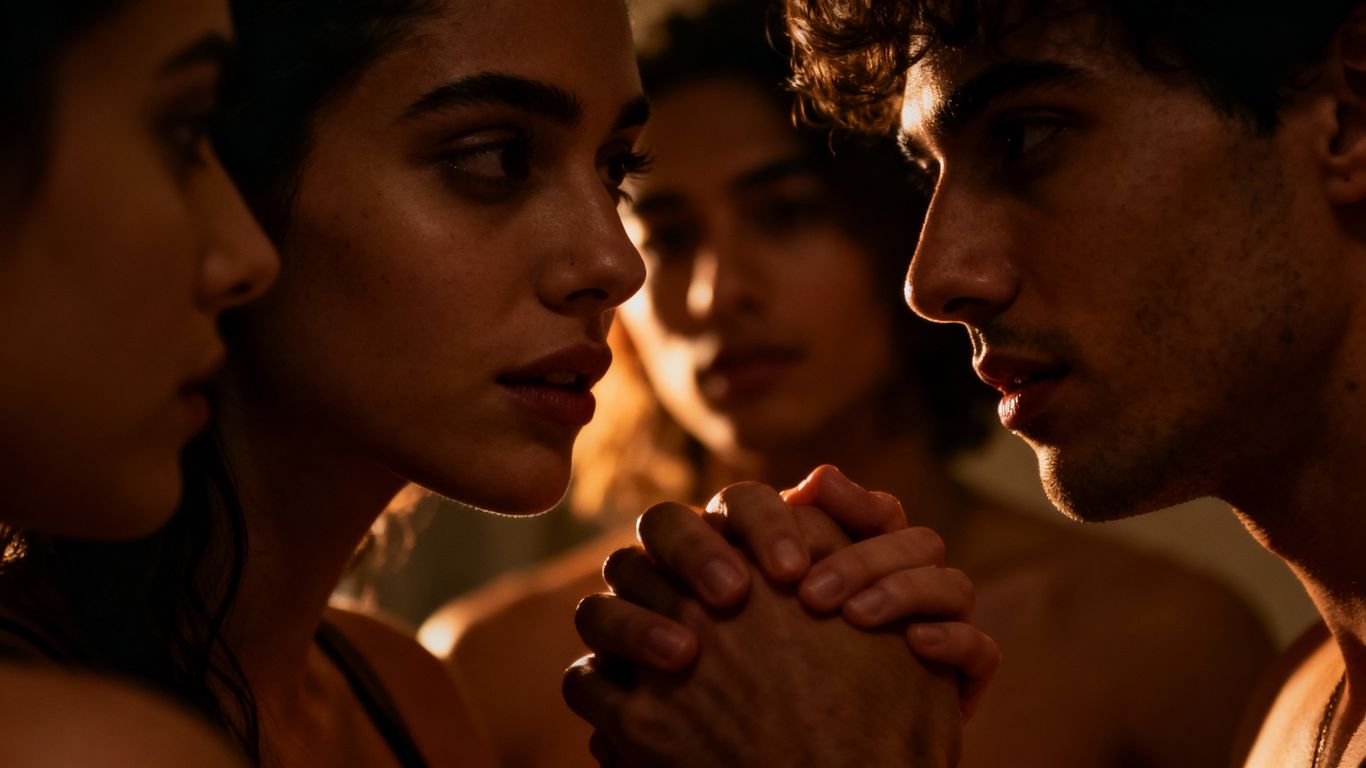
Hey everyone, so I’ve been thinking a lot lately about how we connect with each other, especially when it comes to intimacy and desire. It’s easy to get stuck in what feels ‘normal,’ but there’s a whole spectrum of experiences out there. This article, ‘Queer Perspectives on Snowballing: Redefining Pleasure Beyond Norms,’ dives into some of those less-talked-about aspects of queer life and connection. We’re going to look at how people have found pleasure and community in ways that go against the grain, exploring different times, places, and the personal choices involved. It’s about understanding that desire isn’t a one-size-fits-all thing and that finding connection can happen in many forms.
Key Takeaways
- Queer communities have historically created spaces for connection and pleasure that exist outside mainstream expectations.
- Different cities and regions have unique histories and influences that shaped their local queer social scenes and how people connected.
- Casual sexual encounters within queer communities can be about more than just identity; they often involve personal choice, discretion, and the pursuit of pleasure.
- The idea of ‘community’ in queer spaces has shifted over time, moving from more collective experiences to a greater emphasis on individualism.
- Understanding queer history shows a diverse range of experiences and the ongoing redefinition of pleasure and connection beyond conventional norms.
Queer Perspectives on Snowballing: Redefining Pleasure Beyond Norms
When we talk about queer experiences, it’s easy to get stuck on labels and identities. But what about the actual pleasure? That’s where things get really interesting, especially when we look at practices like Snowballing. It’s not just about sex; it’s about connection, discretion, and finding joy in ways that might not fit the mainstream mold. This is about redefining sexual pleasure on our own terms.
Navigating Desire in Public Spaces
Queer social scenes have always been a bit of a mixed bag. For a long time, finding spaces to connect, especially for casual encounters, meant relying on coded language or specific, often hidden, locations. Think dimly lit bars, certain parks after dark, or even just knowing the right people. It wasn’t always about grand declarations; it was often about quiet nods and shared glances. This created a unique kind of intimacy, a shared understanding built on discretion and mutual respect. It’s a far cry from the open-door policy of some modern queer venues, and for many, that sense of privacy was part of the allure.
The Evolution of Queer Social Scenes
Over the decades, how queer people meet and socialize has changed a lot. We’ve seen shifts from very localized, almost underground networks to more visible, organized communities. This evolution has brought both benefits and drawbacks. While increased visibility is great, some feel it has led to a more commercialized scene, losing some of the raw, radical edges that defined earlier gatherings. The way people connect, whether through apps or specific events, reflects these broader societal changes. It’s a constant dance between wanting to be seen and wanting to maintain a sense of personal space and control.
Community and Connection in Niche Gatherings
Sometimes, the most meaningful connections happen in smaller, more focused settings. These niche gatherings, whether they’re themed parties, specific club nights, or even online groups, allow for a deeper sense of community. They often cater to particular interests or practices, like Snowballing, providing a safe and understanding environment. This isn’t about exclusion; it’s about creating spaces where specific desires and needs can be met without judgment. It’s a form of alternative sex education, where shared experiences and open communication build trust and foster genuine connection.
“The Swingtowns community has been a major source of inspiration for many years now and has become one of the most popular destinations for swing communities” -Thunderdicka
Historical Contexts of Queer Encounters

Visibility and Invisibility in Past Decades
Looking back, queer life often existed in the shadows. For a long time, especially before the 1967 Sexual Offences Act in the UK, same-sex relationships and activities were illegal. This meant that places where queer people could meet and socialize had to be discreet. Think of pubs that were known locally as queer spots, but weren’t advertised as such. People knew, and that was enough. This era fostered a unique sense of community born out of shared risk and secrecy. Even after laws changed, arrests and prosecutions didn’t immediately stop; in some ways, they even increased for a bit. It was a complicated time, where visibility could bring danger, but invisibility meant isolation.
The Role of Specific Venues and Locations
Certain places became hubs for queer communities. These weren’t always obvious. Sometimes it was a particular pub, like the New Union in Manchester or the Lockyer Hotel in Brighton, where people felt they could be themselves, or at least more themselves than elsewhere. These spots often became like a second family. You’d find a mix of people, and the staff might even look out for you. Other times, it was less about a specific building and more about an area, like Union Street in Plymouth, known for sailors. These locations were vital for connection, offering a sense of belonging in a world that often didn’t understand or accept them. It wasn’t always glamorous; one description of a place in Plymouth mentioned a ‘tacky room’ with ‘dregs of society’ and drunken sailors, but it was still a place to connect.
Shifting Social Norms and Their Impact
Social norms around gender and sexuality have changed a lot over the decades. As the idea of a strict heterosexual/homosexual divide became more common, queer people often felt more separated from the mainstream. But these shifts also led to different kinds of queer spaces and communities. Some people celebrated these changes, seeing more freedom and acceptance. Others felt that as queer spaces became more mainstream or commercialized, they lost some of their original, more radical edge. The way these wider trends played out really depended on the local area – things like local politics, police activity, and the general vibe of the town all played a part. So, while ‘pride’ became a bigger concept, it felt different from place to place.
The Nuances of Casual Sexual Encounters

Casual sex, especially within queer communities, often gets a bad rap or is oversimplified. It’s not just about a quick hookup; there’s a whole spectrum of experiences and motivations involved. For many, these encounters offer a space for exploration and pleasure that might not fit into more traditional relationship models. It’s about finding connection and intimacy on one’s own terms, outside of societal expectations.
Beyond Identity: Pleasure and Discretion
When we talk about casual sexual encounters, especially those involving non-normative sexual practices, discretion is often a major factor. This isn’t necessarily about shame, but about safety and privacy. In many places, especially historically, being openly queer could lead to serious repercussions. So, finding ways to connect discreetly was a survival mechanism as much as anything else. This often meant relying on coded language, specific locations, or a network of trusted friends to find partners. The focus shifts from public declaration to private arrangement, prioritizing personal safety and comfort.
Navigating Masculinity and Desire
For men, particularly those who might not identify as gay but engage in casual sex with other men, there’s a complex interplay of masculinity and desire. Sexual Script Theory touches on how societal expectations shape these behaviors. It’s possible to hold onto a certain public persona while exploring private desires. This can involve a conscious separation between one’s everyday life and these encounters, allowing for a different kind of freedom. The imperative is often to maintain a certain image, which means the encounters themselves need to be kept separate and private.
The Allure of the Unconventional
What draws people to casual encounters, especially those that push boundaries? For some, it’s the thrill of the forbidden or the unconventional. It can be a way to break free from routine and explore different facets of their sexuality. There’s also a sense of community that can arise, even in fleeting encounters. People might find shared experiences and understanding in spaces that are specifically designed for or tolerant of these kinds of interactions. It’s about finding pockets of acceptance and pleasure where they can be themselves, even if just for a short while.
Here’s a look at some common aspects:
- Privacy: The need to keep encounters discreet for safety or personal reasons.
- Exploration: A desire to experiment with different sexual experiences.
- Connection: Finding temporary intimacy or camaraderie.
- Freedom: Escaping societal norms and expectations.
“Swingtowns is hands down the best community that I have had the pleasure to be a part of. Would recommend this website to anyone in the lifestyle!” -SlikRik1Ace
Regional Differences in Queer Life
It’s easy to think of queer life as one big, uniform thing, especially when we look at major cities. But dig a little deeper, and you’ll find that experiences can really shift depending on where you are. The vibe in Brighton isn’t the same as in Plymouth, and that’s totally understandable when you consider the history and local flavor of each place.
Brighton’s Cosmopolitan Edge
Brighton has long been a magnet for queer folks, and it’s got this reputation for being a bit of a free-for-all, in the best way possible. It’s not just about being a seaside town; there’s a real sense of chosen community here. People moved to Brighton because they wanted to be there, bringing their own ideas and making the place feel vibrant and, well, cosmopolitan. By the 60s, the scene was already buzzing, maybe a little too much for some, with cliques and a certain snobbery about who was ‘in’ and who wasn’t. You had this mix of quick-witted locals and visitors, creating a style that was maybe a bit loud, a bit ‘grotesque’ to some, but definitely fashionable, with strong ties to London. It felt like a place where you could be yourself, away from the mainstream, and that ease, that possibility, really set it apart.
Plymouth’s Naval Influence and Secrecy
Plymouth has a different story. Think naval town, think sailors, and you get a sense of the undercurrents. For a long time, queer life here was more about staying under the radar. There were pubs, sure, like the Lockyer Hotel, where people could find a bit of comfort and a sense of family, but the general advice was ‘nothing else’ beyond a bit of fun. It was a place where discretion was key, especially with the presence of sailors and the general societal attitudes. The Paramount, for instance, was described as a ‘tacky room’ where you’d find ‘queer boys’ and ‘dregs of society,’ a far cry from the open expression seen elsewhere. Even after laws changed, there was a sense of needing to keep things quiet, a ‘pride in passing’ rather than a loud declaration.
Manchester’s Evolving Gay Village
Manchester’s queer scene has seen a significant transformation. While it faced its own challenges, including heavy-handed policing and hostility from groups like the National Front, there was also a strong push for civic pride to intertwine with gay pride. The city’s industrial past meant there were often vacant buildings, which queer communities then repurposed, contributing to the gentrification and the rise of the Gay Village. This area became a hub, a visible sign of queer presence and a place for social and political networking. Unlike some other cities where the scene might have been more dispersed or underground, Manchester developed a concentrated, evolving space that reflected both its industrial roots and its modern queer identity.
“We’ve only been in the LS for about a year but we have found some really great people using SwingTowns. Wish we would have found the website sooner.” -2Adults89
Modern Interpretations of Queer Pleasure

Individualism vs. Collective Experience
Today, the landscape of queer pleasure is a lot more varied than it used to be. While some folks still find community and connection in specific, shared spaces, there’s also a big push towards individual expression and exploration. It’s less about fitting into a predefined mold and more about discovering what feels good for you. This shift means that LGBTQIA+ sexual exploration isn’t a one-size-fits-all deal anymore. People are piecing together their own experiences, sometimes drawing from different subcultures or online communities, sometimes just figuring it out on their own.
The Commodification of Queer Spaces
It’s hard to ignore how commercialization has changed things. What were once underground havens or spaces for genuine connection can sometimes feel like they’re being packaged and sold. Think about how certain aesthetics or trends get picked up and marketed. This can be a double-edged sword. On one hand, it can bring more visibility and resources. On the other, it can dilute the original spirit and make it harder to find those authentic moments of queer intimacy and connection that aren’t tied to a price tag.
Reclaiming Radical Edges in Contemporary Culture
Despite the commercial side of things, there’s a strong movement to reclaim the more radical, boundary-pushing aspects of queer culture. This isn’t just about sex; it’s about challenging norms in all areas of life. It means finding ways to express desire and build relationships that go against the grain, even within a society that’s becoming more accepting. It’s about remembering the history of resistance and using that energy to create new forms of pleasure and community that feel truly authentic and empowering. The goal is to keep evolving, to keep questioning, and to keep finding joy in ways that feel right for us, not just what’s expected.
Here’s a quick look at how some people are approaching this:
- Focusing on consent and communication: Making sure everyone involved feels safe and respected is a top priority.
- Exploring diverse forms of intimacy: Moving beyond traditional ideas of relationships and connection.
- Creating personal rituals: Developing unique ways to experience pleasure and build bonds.
- Seeking out niche communities: Finding groups that share specific interests or desires, whether online or in person.
“Great site. Met some great people. Feel secure and private and safe with the site. Definitely recommend!” -Anguslove
Finding Our Own Ways
Looking back at how queer communities have found connection and pleasure over the years, it’s clear there’s no single blueprint. From the quiet pubs of Plymouth to the more visible scenes in Brighton, people have always found ways to connect, even when it wasn’t easy. What we’ve seen is that these spaces, whether they were hidden or out in the open, offered a sense of belonging and a chance to just be. It reminds us that pleasure and community can take many forms, and that finding what works for you, and for your people, is what really matters. The ways we connect and express ourselves are always changing, and that’s okay. It’s about building spaces and finding joy, on our own terms.
Frequently Asked Questions
What does ‘snowballing’ mean in this context?
In this article, ‘snowballing’ refers to casual sexual encounters, often in public or semi-public spaces. It’s about finding pleasure and connection outside of traditional relationships, and how queer communities have explored this.
How has the way queer people socialize changed over time?
Social scenes for queer people have changed a lot. In the past, there were fewer safe spaces, and people often met in secret. Now, there are more dedicated queer venues and online ways to connect, though some feel this has also led to more commercialization and less of a rebellious spirit.
Are queer experiences the same everywhere?
No, not at all. Different cities and regions have unique queer histories and cultures. For example, Brighton has a reputation for being openly expressive, while Plymouth, with its naval history, had more discreet encounters and a focus on maintaining a ‘normal’ appearance.
Why is discretion important in some queer encounters?
In the past, and even sometimes now, being openly queer could lead to judgment, discrimination, or even danger. Discretion allowed people to explore their desires while still fitting into societal expectations or protecting themselves.
How do different queer communities view these casual encounters?
Views vary. Some celebrate the freedom and pleasure found in these encounters, seeing them as a way to express identity beyond norms. Others might feel that the focus has shifted too much to individual pleasure or commercial spaces, losing a sense of collective community or radical expression.
Does ‘snowballing’ only involve gay men?
While the term might be more commonly associated with certain groups, the article discusses how various people within the queer community, including lesbians and trans individuals, have navigated and experienced casual sexual encounters and sought pleasure beyond traditional expectations.
Celebrate Pleasure on Your Terms – Where Queer Exploration Thrives
Pleasure looks different for everyone, and queer communities have long embraced the freedom to define intimacy in their own way. Join a space where communication, consent, and individuality are at the heart of every connection. Explore conversations that honor authenticity and encourage you to discover what feels right for you. Sign up for a free SwingTowns account today to begin your adventure.
“I’ve been looking for a fun community who share the same interests as I do, and most have failed to meet my expectations. But SwingTowns by far has had the most fun engagements with REAL people, much more than anywhere else I’ve found. Most people on here have been fun, sexy, engaging, and willing to help a young buck learn the ropes of this lifestyle.” -Johncarpenter


