
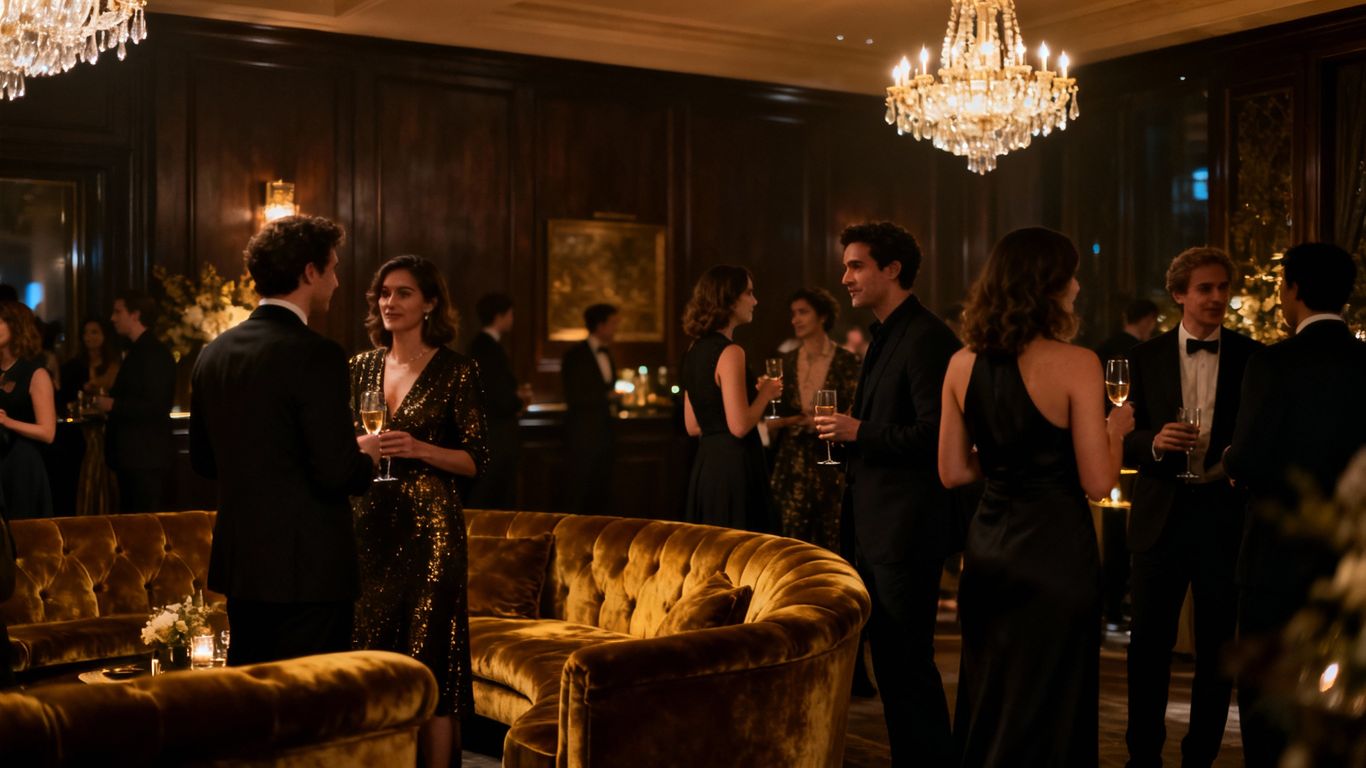
There’s a lot of talk out there, especially online, about different kinds of parties and gatherings. One that seems to pop up a lot is the ‘Black Sheet Party.’ Honestly, the name alone brings up a bunch of images and ideas, and not all of them seem to be based on reality. It’s easy to get caught up in what you hear or see in snippets, but what actually goes on at these events? Let’s try to clear up some of the confusion and look at what’s really happening versus what people *think* is happening. We’re going to pull back the curtain a bit on the ‘Inside a Swingers Black Sheet Party: What Really Happens vs. Myths’ and see what we find.
Key Takeaways
- Many common ideas about Black culture, like ‘Black don’t crack’ or innate musical talent, are often oversimplified myths or generalizations that don’t hold up for everyone.
- Media portrayals, from old minstrel shows to modern films, have often relied on stereotypes that don’t reflect the full reality of Black experiences.
- Social movements, like the Black Panthers, are frequently misunderstood, with their complex histories and contributions often reduced to single, inaccurate narratives.
- Stereotypes about criminal behavior, food preferences (like watermelon and fried chicken), and intellectual abilities are harmful and not based on fact.
- Focusing on individuality is important; people are more than their ethnic background, and generalizations about appearance, aging, or behavior don’t apply to everyone.
Debunking Common Misconceptions About Black Culture
Let’s talk about some of those ideas people throw around about Black culture. You know, the stuff you hear in passing or see in movies that just doesn’t quite add up when you look closer. We’re going to break down a few of these common thoughts and see what’s really going on.
The “Black Don’t Crack” Phenomenon: Fact or Fiction?
This is one of those sayings that gets tossed around a lot. The idea is that Black people, especially women, age really well and tend to look younger for longer. While many people agree with this observation, it’s not some magical biological trait. A lot of it comes down to genetics, sure, but lifestyle plays a huge part too. Things like diet, sun exposure, and skincare routines all contribute to how someone ages, regardless of their background. So, while it might seem like a universal truth, it’s more nuanced than just a simple phrase.
- Genetics: Melanin offers some natural protection against sun damage.
- Lifestyle: Diet, exercise, and skincare habits are key factors.
- Observation: Many people notice a trend, but individual results vary.
“Wow!! This site is absolutely amazing. Me and my lady have met some fun sexy people on here and got some great feedback from other couples about our profile.” -JessnOsc77
Rhythm and Dance: Are Musical Talents Innate?
Another common idea is that Black people are just naturally gifted with rhythm and can all dance. While there’s a rich history of music and dance within Black communities, and many incredibly talented artists have emerged, this doesn’t mean everyone has the same abilities. Talent is developed through practice and passion, not just handed out at birth. You’ll find people of all backgrounds who are amazing dancers and musicians, and you’ll also find those who aren’t. It’s a stereotype that, while often meant positively, can put unfair pressure on individuals.
- Talent requires practice and dedication.
- Musicality varies greatly among individuals.
- Cultural appreciation doesn’t equal innate ability for all.
The “Black Draws Heat” Myth
This one is a bit stranger and less common, but it pops up sometimes. The idea that Black people somehow “draw more heat” or attention in swinger spaces because of race is a myth rooted in stereotypes, not reality. In actual black sheet party culture, interest is communicated through consent signals and personal choice—not assumptions about someone’s body, race, or desirability. Black sheet systems exist precisely to remove guesswork and bias by making intentions visible and opt-in. Any suggestion that Black people are inherently more “provocative,” “dominant,” or “sexual” reflects racialized myths, not how respectful swinger communities operate. Healthy spaces actively reject these ideas and emphasize that attraction is individual, consent-based, and never owed or implied.
Media Portrayals vs. Lived Realities
It’s wild how often what we see on screens doesn’t quite match up with actual life, right? Especially when it comes to Black culture. For ages, movies and TV shows have painted pictures that are, well, pretty far from the truth. These portrayals, whether intentional or not, really shape how people think.
Stereotypes in Early Hollywood and Minstrel Shows
Back in the day, early Hollywood and those old minstrel shows were something else. They often showed Black people in really exaggerated, sometimes downright mean ways. Think about characters that were supposed to be funny but were just plain offensive. Even as things changed, and blackface became less common, these kinds of stereotypes stuck around. They’d pop up as the “mammy” figure, or the “pickaninny,” or the “tragic mulatto.” These images were everywhere and really set a tone for how Black folks were seen.
Modern Media’s Evolving Archetypes
Fast forward to today, and it’s not like all those old stereotypes just vanished. They’ve sort of morphed. You still see characters on TV and in movies that feel like they’re pulled from those old molds, sometimes it’s subtle, other times it’s super obvious. This keeps happening, and it means Black actors often get stuck playing similar roles. It limits the kinds of stories we get to see about Black communities.
- News Coverage: Studies have shown that news programs often show Black individuals more frequently in situations involving arrest or needing help. This can create a skewed perception of reality.
- Film and TV: Characters can sometimes lean into tropes like the “welfare queen” or the overly aggressive individual, even if the show tries to be realistic.
- Social Media: Even online, stereotypes can persist, sometimes in new and unexpected ways.
“So far it’s been a fun way to connect with like minded people. In a open, judgement free environment. Lots of people to get to know.” -StaggerinVixen86
The “Magical Negro” Trope in Film
Then there’s this thing called the “Magical Negro” trope. It’s when a Black character exists mainly to help the white protagonist with their problems, often with some kind of wisdom or spiritual insight. They don’t usually have their own full story or development. It’s like they’re there just to serve the white character’s journey. This trope, while sometimes seeming positive on the surface, actually flattens Black characters and keeps them from being fully realized people on screen. It’s a subtle way that media can reinforce certain ideas about race and who gets to be the main character in their own story, which is a far cry from the diverse real experiences at adult parties or any other social gathering.
This whole discussion about media is important because it’s not just about entertainment. It’s about how we understand each other and the world around us. And when we’re talking about things like real experiences at adult parties, the gap between media images and actual life can be pretty huge.
Challenging Stereotypes in Social Movements
Social movements have often been painted with a broad brush, sometimes seen as just fleeting moments of rebellion or phases that people would eventually grow out of. But looking closer, especially at movements involving Black communities, reveals a much more complex and impactful reality. These weren’t just protests; they were organized efforts that brought serious issues to the forefront and pushed for real change.
The Black Panthers: Beyond Misogyny and Homophobia
It’s a common, but often inaccurate, idea that the Black Panther Party was solely a misogynistic and homophobic group. While it’s true that some chapters might have leaned into more traditional gender roles, that wasn’t the whole story. Many parts of the Party actively supported women’s rights and even found common ground with the early gay rights movement. They encouraged women to take on leadership roles, and in many ways, the fight for Black liberation and the fight for LGBTQ+ rights were seen as connected struggles.
- Support for Women: Many women were integral to the Black Panther Party’s operations, from community outreach to political organizing.
- Alliance Building: The Party sometimes aligned with other marginalized groups, recognizing shared struggles against oppression.
- Community Programs: Beyond political action, the Panthers ran vital community programs like free breakfast for children, demonstrating a commitment to social welfare.
“This is the best site we have found! Easy to navigate and easy to make great long lasting memories and friends!” -julwil8182
Social Movements and Lasting Change
Many of the movements that gained traction, particularly in the mid-to-late 20th century, didn’t just fade away. They led to significant shifts in how society viewed issues like racism and inequality. Think about the music, the art, and the laws that changed because people spoke up and organized. These movements weren’t just about making noise; they were about making a difference that still echoes today. It’s easy to dismiss activism as just a phase, but the results often prove otherwise.
Feminism: Diverse Voices and Contributions
Feminism is often portrayed as a movement led mainly by white, middle-class women, but that framing leaves out essential history. Black women and other women of color fought for their rights long before—and throughout—every mainstream “wave,” often while facing both racial and gender discrimination. Their lived realities brought perspectives that expanded what equality had to mean.
These women were not only participants; they were leaders, strategists, and thinkers whose contributions were frequently minimized or left out of historical records. Their activism also intersected with broader social justice work, including labor rights, civil rights, and community advocacy. Remembering this matters because liberation is rarely a single-issue campaign, and progress has always been shaped by many voices at once.
The Truth Behind “Black” Stereotypes
It’s easy to fall into traps when we talk about groups of people, and when it comes to Black culture, there are a lot of old ideas floating around that just don’t hold up. We’re talking about stereotypes that have been around for ages, often pushed by media and unfortunately, sometimes just repeated without much thought. These aren’t just harmless ideas; they can actually shape how people see each other and even affect opportunities.
Criminal Stereotyping and Media Narratives
One of the most damaging stereotypes is the idea that Black people are inherently more prone to crime. You see this pop up in movies and news reports way too often. It’s like a default setting for some storytellers to portray Black men, in particular, as criminals, drug dealers, or generally dangerous. This isn’t based on reality for the vast majority of people, but it’s a narrative that’s been pushed for decades. It creates this unfair picture that can lead to real-world consequences, like biased policing or job discrimination. This persistent portrayal ignores the complex social and economic factors that actually contribute to crime rates.
Food Myths: Watermelon and Fried Chicken
Then there are the food stereotypes. You know the ones – watermelon and fried chicken. These have roots in minstrel shows from a long time ago, where Black people were often depicted as lazy and only interested in simple pleasures like these foods. It’s a way to infantilize and demean a whole group of people. It’s frustrating because food is such a rich part of culture, and reducing it to these tired, old jokes is just plain disrespectful. It completely misses the mark on the diverse and sophisticated culinary traditions within Black communities.
Intellectual Capacity and Academic Achievement
Another persistent myth is that Black people aren’t as intelligent or as capable academically as other groups. This one is particularly harmful because it directly impacts educational and career paths. Historically, this stereotype was used to justify denying Black people access to good schools and jobs. Even today, you might hear subtle (or not so subtle) suggestions that Black athletes are only good at sports because they aren’t academically inclined, or that Black professionals aren’t as sharp. It’s a baseless idea that ignores the incredible achievements of Black scholars, scientists, artists, and thinkers throughout history and today. It’s about understanding the black sheet scene, not as a monolith, but as a collection of individuals with diverse talents and intellects.
Exploring Identity and Perception
It’s easy to get caught up in broad strokes when we talk about culture, but when we zoom in on identity, things get way more personal and, honestly, a lot more interesting. We’re going to look at how people see themselves and how others see them, especially when it comes to race and how we age.
The Concept of Race Itself
Let’s be real, the whole idea of ‘race’ is pretty complicated. It’s not like there are clear-cut biological lines separating us. Scientists have been saying for ages that the genetic differences between people we label as different races are actually pretty small. Most of the variation is within groups, not between them. So, what we call race is often more about how society has decided to categorize people, influenced by history and culture, rather than some strict scientific fact. It’s a social construct, not a biological destiny.
Physical Appearance and Aging
There are some common ideas out there about how Black people age, like the “Black Don’t Crack” saying. While many people of color do seem to maintain youthful appearances for longer, it’s not a universal rule. Genetics play a part, sure, but so do lifestyle, skincare, and environmental factors. It’s just another one of those generalizations that doesn’t hold up when you look at individuals. Everyone ages differently, regardless of their background.
Individuality Beyond Ethnic Generalizations
This is the big one, right? We’ve talked about stereotypes and myths, but at the end of the day, everyone is their own person. Trying to fit someone into a box based on their race or ethnicity is just not fair. Think about it: you’ve got people who love jazz and people who can’t stand it, people who are amazing cooks and people who burn toast. It’s the same for any group. Focusing on what makes each person unique is way more rewarding than sticking to tired old ideas.
- Genetics: Plays a role, but it’s not the whole story.
- Lifestyle: Diet, exercise, and stress levels impact appearance and health.
- Environment: Sun exposure and pollution can affect skin and aging.
- Personal Choices: Skincare routines and overall health habits matter.
“Swing towns is my go to dating app. I just joined but truly am in love with swingtowns” -Th3gi4nt
Wrapping It Up
So, after digging into all these common ideas, it’s pretty clear that a lot of what people think they know about Black Panther parties and related topics just isn’t true. We’ve seen how many of these “facts” are actually just old stereotypes or misunderstandings that have stuck around for way too long. It’s important to look past the myths and see the real history and people involved. Hopefully, this has cleared some things up and made you think twice about what you’ve heard.
Frequently Asked Questions
Is it true that Black people age better and don’t show wrinkles as much?
The idea that ‘Black don’t crack’ is a popular saying, and many people believe it’s true. It’s thought that melanin, the pigment that gives skin its color, offers some protection from the sun and might help skin age more slowly. However, how well someone ages also depends a lot on their lifestyle, like diet and health habits. So, while skin tone might play a part, it’s not the only reason someone looks younger.
Are Black people naturally better at dancing and music?
This is a common stereotype, but it’s not accurate to say that all Black people are naturally gifted with rhythm or musical talent. While music and dance are a huge part of many Black cultures and history, talent varies from person to person, just like in any group. Some Black individuals might not be natural dancers, and people of all backgrounds can be incredibly talented musicians and dancers.
Is the myth that Black people ‘draw heat’ true?
The idea that Black people ‘draw heat’ is a really strange myth that doesn’t have any scientific basis. It might come from the fact that dark colors absorb more heat, but people aren’t objects. Our bodies regulate their own temperature. This myth is pretty silly and isn’t taken seriously by most people.
Did the Civil Rights Movement end racism?
The Civil Rights Movement was incredibly important and brought about major changes in fighting against racism. It helped create laws and awareness that challenged unfair treatment. However, racism still exists today, both in how individuals treat each other and in larger systems. So, while huge progress was made, the fight for equality is ongoing.
Were the Black Panthers just about violence and anger?
The Black Panther Party is often misunderstood. While they did believe in self-defense and sometimes used strong language, they also worked for community improvement and supported causes like feminism and gay rights. Their actions and words were often a response to the violence and injustice they faced. They weren’t just a violent group; they were complex and had many goals.
Are stereotypes about Black people in movies and TV shows accurate?
Sadly, media portrayals have often relied on stereotypes rather than showing the full reality of Black people’s lives. From old movies to modern shows, you might see characters fitting old, harmful ideas. These images can shape how people see Black individuals and communities, but they don’t reflect the diverse and complex experiences of Black people in real life.
Clarity Over Assumptions—What the Scene Is Really About
Much of the anxiety around swinger events comes from myths, not reality. Join a welcoming community where open-minded adults share real experiences, honest expectations, and consent-first insights about events like black sheet parties. Learn what actually happens, what participation really looks like, and how people navigate these spaces comfortably. Sign up for a free SwingTowns account today to connect, learn, and explore with confidence.
Swingtowns is incredible, I have met many awesome couples and single females on here. I recommend this site to anyone in the lifestyle! -MrMsBullDurham


