

Thinking about trying out erotic flagellation? It can seem a bit intimidating at first, but honestly, it doesn’t have to be. This whole thing is really about exploring sensations and building intimacy with your partner. The most important thing is to go slow, communicate openly, and make sure everyone feels safe and respected. We’ll walk you through the basics, from understanding what flagellation is all about to making sure you have a great experience, safely. It’s all about consent and having fun, really.
Key Takeaways
- Start with a simple conversation about what you both want and what your limits are. Safe words are super important for this.
- Begin with gentle tools and focus on larger, safer areas of the body like the buttocks or back.
- Pay close attention to your partner’s reactions and body language. If they seem uncomfortable, slow down or stop.
- Practice your aim on something soft first to get a feel for your implement and avoid accidental hits in sensitive spots.
- After play, take time to connect with your partner, check in physically, and show care. This builds trust.
Understanding Erotic Flagellation Basics
Defining Flagellation and Its Appeal
So, what exactly is erotic flagellation? At its core, it’s a form of impact play where one partner uses a flogger or similar implement to strike another, usually on fleshy parts of the body like the buttocks or back. The appeal is multifaceted. For the person receiving, it can be intensely arousing, releasing endorphins that create a sense of euphoria and deep relaxation. It’s a way to explore sensation, push boundaries, and experience a unique kind of surrender. For the person giving, it can be empowering and sensual, a way to express care and control. It’s about the shared experience and the connection built through trust and sensation. Many find the rhythmic nature of the strokes incredibly hypnotic, leading to a profound sense of presence.
Exploring Different Types of Floggers
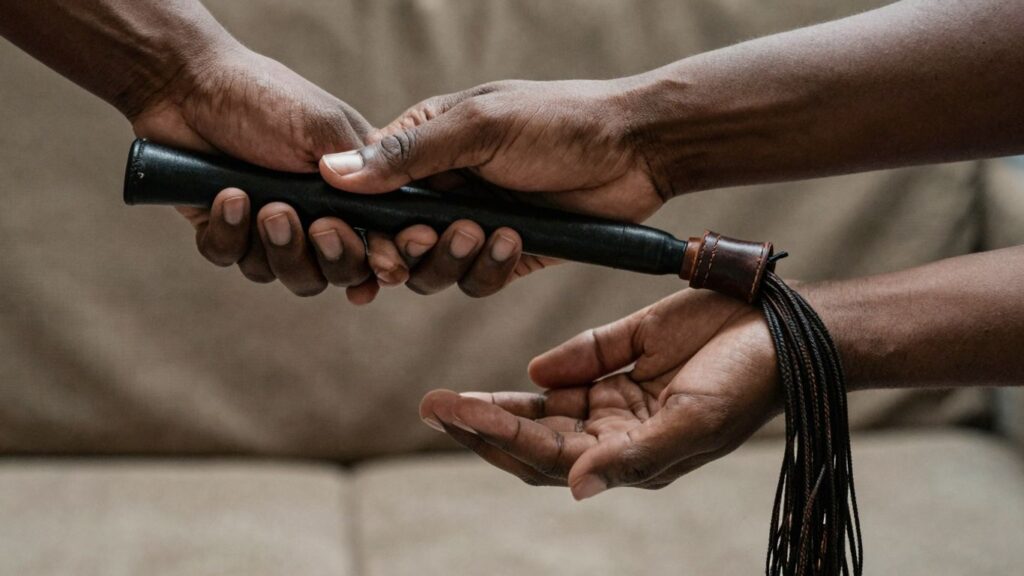
When you start looking into flagellation, you’ll quickly see there are tons of different floggers out there. They’re not all the same, and the type you choose can really change the sensation. You’ve got your basic suede floggers, which are usually pretty soft and forgiving, making them great for beginners. Then there are leather floggers, which can range from soft and supple to firm and stingy. Silicone and paracord floggers offer even more variety in texture and weight. Even rubber ones exist! Basically, if you can bundle strands together with a handle, it can be a flogger. For those just dipping their toes in, a simple, inexpensive suede flogger is often recommended. It’s a good way to get a feel for gentle flogging for couples without a huge investment.
The Importance of Starting Slow
This is probably the most important piece of advice you’ll hear: start slow. Seriously. Don’t go in thinking you need to be a seasoned pro or that intensity is the only goal. Think of it like learning any new skill, whether it’s cooking or playing an instrument. You wouldn’t try to bake a soufflé on your first try, right? The same applies here. Begin with very light strokes, focusing on areas that are generally considered safer and have more padding, like the buttocks. Give yourself and your partner time between strokes – maybe three seconds or so. This allows you both to gauge reactions and communicate what feels good. It’s all about building comfort and understanding. Trying out safe spanking techniques with a light touch is the best way to build confidence for both partners.
“SwingTowns is awesome place to meet great people. We have met a lot nice people on here and had amazing time with several couples.” -LoveTerri77
Prioritizing Safety and Consent
Okay, so you’re thinking about exploring consensual pain, which is awesome. But before we even get to the fun stuff, we really need to talk about safety and consent. This isn’t just some formality; it’s the absolute bedrock of everything we do in kink. Without it, it’s not play, it’s something else entirely, and nobody wants that.
Establishing Clear Boundaries and Safe Words
Think of boundaries like the edges of a playground. They’re there to keep everyone safe while still allowing for fun. You and your partner need to have a real, honest chat before any play starts. What are you both comfortable with? What’s a hard no? What’s a maybe? It’s super helpful to write this stuff down, honestly. And then there are safe words. These are your emergency brakes. “No” is always an option, of course, but a designated safe word is even better because it’s unambiguous. It means stop, right now, no questions asked. Some people use “red” for a full stop and “yellow” to slow down or check in. Whatever you choose, make sure you both know it and respect it instantly.
- Discuss limits: What kind of sensations are you open to? What’s off the table?
- Agree on safe words: Pick words that are easy to remember and clearly signal a need to stop or slow down.
- Talk about aftercare: What do you need emotionally and physically after play?
Recognizing Your Partner’s Body Language
Safe words are great, but they’re not the whole story. People can’t always articulate what they’re feeling, especially when things get intense. That’s where paying attention to body language comes in. Is your partner tensing up in a way that seems uncomfortable, not just from sensation? Are their eyes wide with fear rather than excitement? Are they breathing really shallowly or holding their breath for too long? These are all cues. Being attuned to these non-verbal signals is just as important as hearing a safe word. It shows you care about their well-being above all else.
Understanding Areas to Avoid and Approach with Caution
When it comes to impact play, not all areas of the body are created equal. Some spots are much safer and more forgiving than others. Generally, the “meatier” parts of the body are better for beginners. Think buttocks, thighs, and fleshy parts of the upper back. These areas have more padding and fewer sensitive nerves or vital organs nearby.
Areas to be extra careful with or avoid altogether include:
- Spine and lower back: Too close to the spinal cord.
- Kidney area: Located on the lower back, these are vital organs.
- Neck and throat: Extremely sensitive and dangerous.
- Head, face, and ears: Very delicate and prone to injury.
- Joints (knees, elbows, etc.): Can be easily injured.
- Feet and hands: Can be very sensitive and have many nerve endings.
“Swingtowns, easy navigating the site, no harassing upgrade ads, easy to find people, premium is not over priced….Just keep swinging, just keeping swinging” -mrgood69
Getting Started with Impact Play
So, you’re curious about impact play. It’s basically any kind of play where one person receives some kind of physical impact from another for pleasure. Think spanking, but it can go way beyond that. It’s a big part of kink for many, and it’s totally okay if you’re just dipping your toes in. The key is to start slow and communicate. We’re talking about an introduction to impact play here, so let’s keep it simple and safe.
Beginner-Friendly Implements
When you’re just starting out, you don’t need anything fancy or intimidating. Your own hands are a fantastic place to begin. A gentle spank on the buttocks or thighs can be surprisingly effective and gives you a good feel for sensation without much risk. If you want to try something a little different, a soft leather paddle or a simple flogger with a few tails can be good next steps. The goal is to get a feel for the sensation and how your partner reacts.
- Hands: The most accessible tool. Start with open palms for a broad, thuddy sensation.
- Soft Paddles: Look for ones made of leather or silicone with rounded edges. They offer a more focused impact.
- Simple Floggers: A flogger with fewer, softer tails is less intense than one with many stiff ones. It provides a different kind of sensation, often described as ‘stingy’.
Techniques for Gentle Introduction
How you deliver the impact matters just as much as what you use. For your first few times, focus on light, controlled strokes. Consistency and rhythm are more important than force.
- Start with the “meatier” parts: The buttocks and thighs are generally the safest and most forgiving areas. They have more padding and fewer sensitive nerves.
- Vary the stroke: Try different angles and speeds. A light tap can be just as arousing as a firmer stroke, especially when building anticipation.
- Listen and watch: Pay close attention to your partner’s reactions. Are they tensing up, gasping, or leaning into it? This feedback is gold.
Practicing Accuracy and Control
As you get more comfortable, you’ll want to work on your aim and control. This isn’t about hitting hard; it’s about hitting where you intend to and with the right amount of pressure. Think of it like learning to draw a steady line. You don’t want to be wildly flailing.
“Swingtowns.com has been one of the best places for meeting like minded and fun party people. I’m always looking to meet new people and this site never fails.” -PoundnSand
This also ties into how to start with restraints, if that’s something you’re considering down the line. Even with light restraints, like having wrists gently held, maintaining control over your impact is key. You don’t want to be swinging wildly if your partner can’t easily move away. Start with simple holds and light impacts, always checking in.
Building Intensity and Exploring Sensations

Once you’ve gotten comfortable with the basics of impact play and have a good handle on safety and consent, it’s natural to want to explore what else is out there. This is where you start to really play with different feelings and build up the experience.
Gradually Increasing Stroke Intensity
Think of this like turning up the volume, but slowly. You don’t want to go from zero to a hundred real fast, or you might scare yourself or your partner. Start with the same kind of strokes you’ve been doing, but maybe hit a tiny bit harder each time. Pay close attention to your partner’s reactions. Are they tensing up? Are they breathing faster? These are good signs that you’re hitting the right spot. If they seem uncomfortable or pull away, ease back up. It’s all about finding that sweet spot where it’s intense but still feels good.
- Start with a “warm-up” phase: Use very light strokes to get the skin ready and build anticipation.
- Increase pressure incrementally: Add just a little more force with each subsequent stroke.
- Listen and observe: Your partner’s verbal and non-verbal cues are your best guide.
Exploring Rhythmic and Cyclic Strokes
Beyond just hitting harder, you can also change how you hit. Instead of random taps, try creating a pattern. You could do a few faster strokes, then slow down, or alternate between a light tap and a slightly firmer one. This can create a really interesting build-up of sensation. It’s like a dance, where the rhythm itself becomes part of the pleasure. Some people find that a steady, consistent rhythm can be very hypnotic, while others prefer a more varied, unpredictable pattern. Experiment to see what feels best for both of you.
“We have met so many nice people since joining swingtowns. Only positive things.” -Honeybeee
Introducing Light Restraint Play
When you’re ready to add another layer, light restraint can be a great way to go. This doesn’t mean anything too complicated or restrictive, especially at first. Think about gently holding your partner’s wrists above their head, or using a soft scarf to tie their hands loosely together. This can increase their vulnerability and focus their attention on the sensations they’re feeling. It also adds a visual element to the play. Remember, consent is key here, and any restraints should be easy to remove and never too tight.
Here are some ideas for light restraint:
- Gentle wrist hold: Simply hold your partner’s wrists above their head.
- Scarf tie: Use a soft scarf to loosely tie wrists together in front of the body.
- Ankle hold: Gently hold one or both ankles to limit movement.
- Blindfolds: While not strictly restraint, a blindfold can heighten other senses and increase a feeling of helplessness.
Essential Aftercare and Responsible Play

Okay, so you’ve had your session, things might be a little intense, and now it’s time to bring things back down. This part, the aftercare, is super important. It’s not just about tending to any physical marks, but also about reconnecting emotionally after you’ve both been in a heightened state.
The Role of Post-Scene Connection
After the intensity of impact play, both partners often need a moment to transition back to a more grounded reality. This is where connection really shines. Think about what makes you feel cared for. For some, it’s a warm hug, a gentle massage, or just quiet time spent together. For others, it might be talking through the experience, sharing what felt good or what was challenging. The goal is to make sure everyone feels seen and valued.
- Physical Comfort: Offering a warm drink, a soft blanket, or a gentle touch can go a long way.
- Emotional Reassurance: Simply being present and offering kind words can help.
- Verbal Check-in: Ask how they’re feeling, both physically and emotionally.
Addressing Physical Comfort and Healing
Impact play can leave its mark, literally. So, tending to the physical side of things is a big part of responsible play. This isn’t just about looking at any redness or marks that might appear; it’s about helping the body recover.
- Hydration: Offer water or a soothing beverage.
- Soothing Skin: If there’s any soreness, a gentle lotion or a cool compress can feel really good. Avoid anything that might irritate the skin.
- Gentle Massage: A light, caring massage on the areas that were played on can help ease muscle tension and feel comforting.
“This site has been super fun. Would highly recommend for all players :)” -coltpl4y
Fostering Trust Through Responsible Practices
Every time you engage in impact play and follow it up with good aftercare, you’re building trust. It shows that you care about your partner’s well-being beyond just the play itself. This builds a stronger foundation for future exploration.
- Consistency: Make aftercare a non-negotiable part of every session.
- Open Communication: Keep talking about what works and what doesn’t, even after the scene is over.
- Respect Boundaries: Always honor safe words and cues, and check in if you’re unsure about anything.
Wrapping It Up
So, you’ve taken the first steps into exploring erotic flagellation. Remember, this is all about communication and trust between you and your partner. Start slow, pay attention to reactions, and always, always use a safeword. There’s no rush to get to the intense stuff. The journey itself, learning what feels good and building that connection, is a huge part of the fun. Keep talking, keep exploring safely, and enjoy discovering this new side of your intimacy together.
Frequently Asked Questions
What exactly is erotic flagellation?
Erotic flagellation is a type of play where one person gently strikes another with a tool, like a flogger, for sexual pleasure. It’s all about the sensations and the trust between partners. Think of it like a more intense kind of spanking, but with special tools and a focus on building excitement.
Is it safe to try flagellation?
Yes, it can be very safe if you do it right! The most important things are talking about what you both like and don’t like beforehand, and agreeing on a ‘safe word’ – a word you can say to stop everything immediately if it gets too intense. Always start slow and pay attention to how your partner is feeling.
What kind of tools should I use to start?
For beginners, it’s best to start with something soft and light. A suede flogger is a great choice because its strands are usually wider and softer, making for gentler impacts. Avoid anything too stiff or heavy when you’re just starting out.
Where on the body is it okay to hit?
The best places to start are the fleshy parts of the body, like the buttocks and the fleshy parts of the thighs. These areas are less likely to cause injury. It’s really important to avoid hitting the head, neck, face, hands, feet, spine, and kidneys, as these areas are much more sensitive and can be easily hurt.
What’s a ‘safe word’ and why is it important?
A safe word is a special word you and your partner agree on that means ‘stop immediately.’ It’s super important because it makes sure that both people feel in control and safe. Even if you’re having a great time, you can use the safe word if something feels wrong or too much, and your partner must stop right away. It builds a lot of trust.
What is ‘aftercare’ and why do we need it?
Aftercare is what you do together after the play session is over. It’s about taking care of each other. This could mean cuddling, talking about how it felt, giving a gentle massage, or helping with any soreness. It helps you both feel connected and cared for, making the whole experience more positive and strengthening your bond.
Confidence Begins With Care—Learning Through Consent and Control
Starting something new feels easier when you have the right information and a supportive space to learn. Join a welcoming community where open-minded adults share real experiences, safety-first guidance, and respectful conversations about BDSM and exploration. Learn at your own pace, ask questions without judgment, and build confidence through clarity. Sign up for a free SwingTowns account today to begin exploring safely and intentionally.
“Swingtowns has been awesome in this lifestyle ! Finding new couples to play with and of course hang with.” -Skaggszy98


