
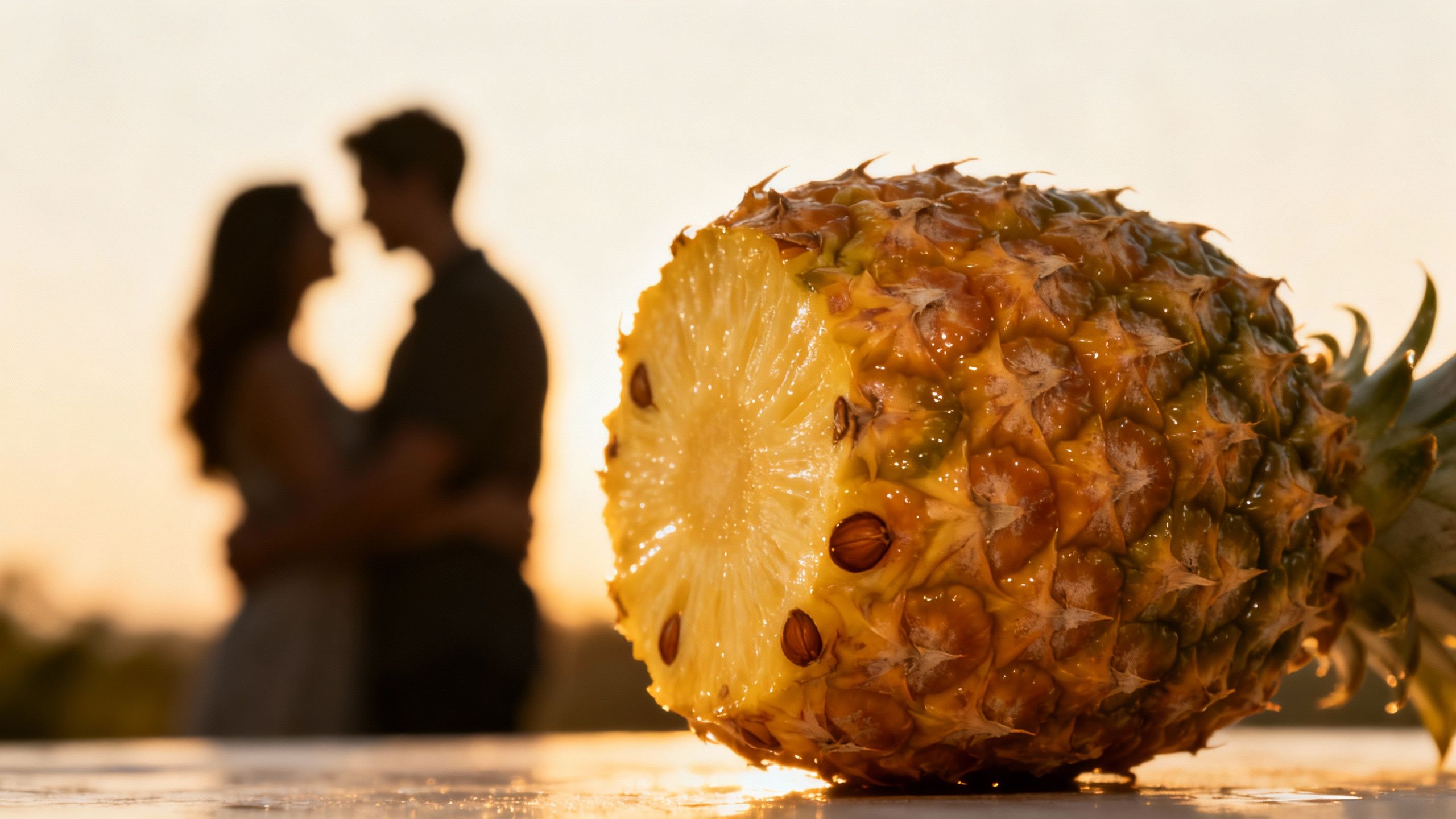
You’ve probably seen them around – maybe on a cruise ship door, a t-shirt, or even a tote bag. That upside-down pineapple. It seems innocent enough, right? Just a quirky fruit choice. But for those in the know, it’s a secret signal, a little nod to a specific lifestyle. This article is going to explore The History of the Upside-Down Pineapple in Swinger Culture, digging into how this tropical fruit became a discreet calling card for couples looking for a bit of adult fun. We’ll look at its roots, how it became a symbol, and where you might spot it today.
Key Takeaways
- The pineapple, once a symbol of hospitality, evolved to represent eroticism and seduction in historical contexts.
- The upside-down pineapple emerged as a discreet signal within swinger culture, allowing individuals to identify each other subtly.
- Cruise ships and RVs have become common places to spot the upside-down pineapple symbol, often displayed on doors or in apparel.
- While the upside-down pineapple is a known swinger symbol, not all pineapples signify this lifestyle; context and orientation are important.
- Other symbols, like black rings and the term ‘unicorn,’ are also used within non-monogamous communities to identify participants and roles.
The Pineapple’s Ancient Roots and Evolving Symbolism
The pineapple, that spiky, tropical fruit, has a history far richer and more complex than you might imagine. It wasn’t always just a sweet treat or a kitschy decoration. For centuries, this fruit has carried different meanings, shifting from a symbol of welcome to something far more suggestive.
From Hospitality to Eroticism: A Fruit’s Shifting Meaning
Originally, the pineapple was a rare and exotic import, making it a status symbol. In the 17th century, displaying a pineapple at social gatherings was a sign of wealth and a warm welcome. Hosts would often rent them for parties, and guests would marvel at their presence. This fruit was the ultimate emblem of hospitality and friendship. However, as time went on, its symbolism began to change. Some historical texts even hinted at the pineapple’s sensual side, with certain interpretations suggesting it played a role in ancient tales of temptation and desire. It’s a fascinating journey from being a centerpiece of polite society to hinting at more intimate encounters.
The Pineapple’s Role in Colonial America
When European colonists arrived in the Americas, they encountered the pineapple and were immediately captivated. Bringing it back home was a feat, and its rarity made it a highly prized item. In colonial America, a pineapple placed on a gatepost or doorstep was a clear signal that the homeowner was welcoming visitors and was happy to share their hospitality. It was a way for sea captains returning home to let their communities know they had arrived safely and were ready to entertain. This practice cemented the pineapple’s reputation as a symbol of welcome and good cheer.
Pineapples and the Allure of the Exotic
Beyond its role in hospitality, the pineapple has always held an air of the exotic. Its unique appearance and tropical origins set it apart from more common fruits. This sense of being different and alluring contributed to its mystique. In various cultures and historical periods, fruits that were hard to obtain or had unusual characteristics often took on deeper, sometimes even erotic, meanings. The pineapple, with its crown-like top and rough exterior, certainly fit the bill for sparking imagination and intrigue, paving the way for its later, more discreet uses.
“My husband and I joined Swingtowns a couple of years ago. We are new to this lifestyle and were a little apprehensive in getting involved in something like this, but we wanted to spice up our sex life and bite the bullet. We have met some wonderful respectful people and have become friends with everyone we met.” -Needtocome
Here’s a quick look at how its symbolism evolved:
- Early Symbolism: Wealth, status, and hospitality.
- Colonial Era: A clear sign of welcome and safe return.
- Later Interpretations: Hints of sensuality and the exotic.
This rich history sets the stage for how the pineapple, and specifically its upside-down orientation, would later be adopted as a discreet signal in certain subcultures. It’s a fruit that has truly seen it all, from royal tables to secret signals. You can find out more about the pineapple’s general symbolism as a sign of friendship here.
The Upside-Down Pineapple Emerges as a Secret Signal
So, you’ve seen a pineapple, maybe on a shirt, maybe on a cruise ship door. Usually, it means hospitality, right? Like, “Welcome! Come on in!” But flip that pineapple upside down, and suddenly, the meaning shifts. It’s like a secret handshake for a certain crowd. The upside-down pineapple meaning is pretty specific: it’s a subtle nod to an alternative lifestyle, often associated with swinging.
A Subtle Nod to an Alternative Lifestyle
This isn’t something you’d typically find in a history book about fruit. The pineapple’s journey from a symbol of welcome to a discreet identifier for swingers is a fascinating bit of cultural evolution. It’s a way for people who are part of this community to find each other without making a huge announcement. Think of it as a wink and a nod. It’s a way to signal that you’re part of the lifestyle or perhaps looking to connect with others who are.
The Pineapple as a Discreet Identifier
Why a pineapple? It’s a fruit that’s generally seen as friendly and approachable, which makes it a good candidate for a hidden symbol. It doesn’t scream anything scandalous at first glance. You might see it on jewelry, clothing, or even subtly placed in a home’s decor. The key is that it’s not always obvious. It relies on others in the know to recognize it. It’s a quiet way to say, “I’m open to exploring non-monogamy.”
Evolution of the Symbol on Cruise Ships
Cruise ships have become a bit of a hotspot for this symbol. It makes sense, right? You’re on vacation, away from your everyday life, and looking to maybe let loose a little. People started hanging actual pineapples, often upside down, on their cabin doors. It became a way to signal to other guests that they were interested in meeting up or participating in swinging activities. It’s a pretty bold move, but on a ship full of people looking for fun, it seems to have worked out for many.
Swingtowns is incredible, I have met many awesome couples and single females on here. I recommend this site to anyone in the lifestyle! -MrMsBullDurham
Here’s a quick rundown of where you might spot it:
- Apparel: T-shirts, hats, socks with pineapple designs.
- Accessories: Necklaces, bracelets, keychains.
- Home Decor: Doormats, garden flags, porch decorations.
- Cruise Ships: Actual fruit displayed on cabin doors.
The Digital Age and the Pineapple’s Mainstream Visibility

It’s pretty wild how a fruit can go from being a fancy welcome sign to a secret handshake, right? The internet really blew the lid off the whole upside-down pineapple thing. Suddenly, it wasn’t just something you might see on a cruise ship door; it was everywhere.
Urban Dictionary and Online Communities
Before the internet really took off, the upside-down pineapple was kind of a whispered secret. Then, sites like Urban Dictionary started defining it, though sometimes in ways that were a bit off the mark, like confusing it with a specific act rather than the lifestyle itself. But as more people started talking about it online, especially in forums and dedicated groups, the swinging lifestyle pineapple meaning became clearer. It was like a digital underground railroad for people looking for others who were into the same thing.
Social Media’s Role in Popularizing the Symbol
Then came social media, and wow, did things change. Platforms like TikTok and Instagram became huge hubs for this. You’d see hashtags like #upsidedownpineapple or #swingtok popping up, with millions of views. People were sharing stories, asking questions, and generally making the symbol way more visible. It went from being a subtle nod to a full-on announcement for those in the know. It’s fascinating how a simple image can connect so many people.
Pineapple Emojis and Digital Communication
Even emojis got in on the act. On dating apps, especially those for non-monogamous folks, people started using the pineapple emoji in their profiles. It’s a quick, easy way to signal interest without writing a whole paragraph. Over time, it’s become shorthand—a little digital wink that says, “Hey, I’m part of this community.” Pretty neat how technology has adapted and amplified the symbol.
“Wow!! This site is absolutely amazing. Me and my lady have met some fun sexy people on here and got some great feedback from other couples about our profile.” -JessnOsc77
Here’s a quick look at how the pineapple symbol has spread online:
- Urban Dictionary: Early definitions, sometimes inaccurate, helped introduce the term.
- Forums & Groups: Dedicated online spaces allowed for deeper discussions and community building.
- Social Media Hashtags: #upsidedownpineapple and #swingtok brought the symbol to a massive audience.
- Dating Apps: The pineapple emoji became a common profile indicator.
- Video Platforms: Content creators discussed and demystified the symbol, further increasing awareness.
Pineapples in Practice: Spotting the Symbol in the Wild

So, you’ve heard about the upside-down pineapple and its secret meaning. Now, how do you actually spot it out there in the real world? It’s not always as obvious as a flashing neon sign, but once you know what to look for, you’ll start seeing it everywhere. It’s kind of like when you buy a new car and suddenly see that model everywhere on the road.
On Cruise Ship Doors and RVs
This is probably the most classic place to see the symbol. Cruise ships, with their close quarters and vacation vibe, have become a breeding ground for this discreet signal. You might see an actual pineapple, or a decorative one, placed upside down on a cabin door. It’s a way for couples to let others know they’re open to meeting like-minded people. Similarly, you might spot an upside-down pineapple sticker or decal on the back of an RV. Campgrounds and RV parks can be surprisingly social places, and this is a subtle way to signal your lifestyle to others who might be in the know. It’s a quiet nod to potential connections without being overly blatant.
Apparel and Accessories as Calling Cards
Beyond home decor, clothing and accessories are huge for signaling. You’ll see upside-down pineapples on t-shirts, hats, tote bags, and even jewelry. Think subtle charms on a bracelet or necklace, or a small embroidered pineapple on a pocket. It’s a way to wear your interests without making a huge statement to the general public. Most people will just see a cute tropical print, but those in the know will get the hint. It’s a fun way to connect with others who share your lifestyle, and it can be a great conversation starter if you’re looking to meet new people. Some people even get upside-down pineapple tattoos as a permanent declaration.
The Grocery Store and Other Unexpected Locations
This is where things get really interesting. Some couples have been known to place an upside-down pineapple in their shopping cart while browsing the grocery store. It’s a bold move, but it can be effective for those looking to connect while out and about. You might also see pineapple motifs in unexpected places, like on a coffee mug at a cafe or as a sticker on a laptop. It’s all about finding those little opportunities to signal your openness to others who are also looking. It’s a testament to how creative people can get when trying to find their community.
“So far it’s been a fun way to connect with like minded people. In a open, judgement free environment. Lots of people to get to know.” -StaggerinVixen86
Here’s a quick rundown of where you might spot the symbol:
- Cruise Ship Doors: A classic and common location.
- RV Decals: Often seen at campgrounds and travel stops.
- Clothing: T-shirts, hats, and swimwear are popular.
- Jewelry: Charms, pendants, and pins.
- Accessories: Tote bags, stickers, and keychains.
- Grocery Carts: A more adventurous, public display.
It’s important to remember that not every pineapple you see means something scandalous. Context is everything, and sometimes a pineapple is just a pineapple. But if you start noticing the upside-down variety in these specific contexts, you might just be witnessing a subtle signal in action.
Understanding the Nuances of Pineapple Symbolism

So, you’ve seen the upside-down pineapple, and you’re wondering what’s up with that. It’s not always as straightforward as it seems, and that’s kind of the point. While the pineapple symbol in relationships has definitely gained traction, especially online, it’s important to remember that context is everything.
Not All Pineapples Signal Swinging
Let’s get this straight: just because you see a pineapple doesn’t mean someone’s looking to swap partners. Pineapples have a long history as symbols of hospitality and welcome. Think about it – they were rare and expensive, so displaying one showed you were a gracious host. So, a pineapple on a doormat or a kitchen towel might just mean someone likes tropical decor. It’s the orientation and the setting that really shift the meaning.
The Importance of Orientation: Upright vs. Upside-Down
This is where things get interesting. The upside-down pineapple is the more commonly recognized signal within the lifestyle community. It’s a deliberate twist on the traditional symbol of welcome. While an upright pineapple might just be a friendly nod, flipping it signals something more specific. It’s a subtle way to communicate openness to the swinging lifestyle without being overly obvious. This specific meaning is what makes the upside-down pineapple such a curious icon.
Subtlety and Intent in Symbol Usage
Ultimately, the secret meanings of pineapples rely on a shared understanding. It’s a wink and a nod, a way for like-minded individuals to find each other. You might see it on a cruise ship cabin door, on a piece of clothing, or even as a discreet emoji in a private message. The intention behind displaying the symbol is key. It’s not about shouting from the rooftops; it’s about quiet recognition among those in the know. If you’re curious about how people connect, understanding these symbols can be quite illuminating.
Here’s a quick breakdown:
- Upright Pineapple: Generally means hospitality, welcome, or simply a love for tropical themes.
- Upside-Down Pineapple: Often signals an interest in or participation in the swinging lifestyle.
- Context is Key: Always consider where and how the symbol is displayed.
“This is the best site we have found! Easy to navigate and easy to make great long lasting memories and friends!” -julwil8182
Beyond the Pineapple: Other Symbols in Non-Monogamous Circles
The Black Ring Indicator
While the upside-down pineapple is pretty well-known now, it’s not the only subtle signal out there for folks in non-monogamous circles. Sometimes, it’s about something as simple as jewelry. A black ring, worn on a specific finger of the right hand (usually not the middle one), can be a quiet nod to being part of the swinging scene. It’s a way to spark a conversation or just let others in the know recognize you. It’s not a hard and fast rule, of course, but it’s a symbol that pops up now and then.
The Concept of the ‘Unicorn’
This one isn’t so much an object as it is a term. In the world of couples exploring non-monogamy, a ‘unicorn’ typically refers to a single woman, often bisexual, who is attractive to both partners in a couple and is interested in joining them for some adult fun. It’s a specific dynamic that many couples look for when seeking to expand their experiences. The term itself has become a shorthand for this particular type of connection within the lifestyle.
Other Discreet Signals for Swingers
Beyond the pineapple and the black ring, there are other ways people might signal their interest or participation in non-monogamous relationships. These can range from specific items to more general lifestyle choices that, when combined, paint a clearer picture. It’s all about finding ways to connect with like-minded individuals without being overly obvious to the general public. Some of these include:
- Pampas Grass: Seeing this ornamental grass in a front yard can sometimes be a subtle indicator.
- White Landscaping Rocks: Similar to pampas grass, a specific arrangement or abundance of white rocks might be a signal.
- Anklets or Toe Rings: Wearing these accessories, particularly on the right foot, has been mentioned as a potential sign.
- Switching Wedding Rings: Moving a wedding band to the right hand is another subtle gesture some couples use.
“We are very excited to have joined Swing Towns. We have already chatted and met some fun people. We look forward to meeting many more friends and having a great time making new connections.” –
IzzyBlossomKatee
While the upside-down pineapple in swinger culture has gained significant traction, these other signals show just how varied and nuanced communication can be within these communities. They’re like little inside jokes or secret handshakes for those in the know, helping to build connections and foster a sense of belonging.
The Pineapple’s Place
So, there you have it. The upside-down pineapple, once a simple symbol of hospitality, has taken on a whole new meaning in certain circles. It’s become this quirky, subtle way for people to connect, especially when they’re looking for a good time away from home, like on a cruise. While it might seem a bit out there, it’s really just another way folks find each other and express themselves. Whether you see it on a door, a shirt, or even in a grocery cart, it’s a little nod to a lifestyle that’s definitely more common than you might think. It’s a fun bit of secret language, and honestly, kind of cool how a fruit can carry so much meaning.
Frequently Asked Questions
Why do people use pineapples to signal they are swingers?
Pineapples used to mean welcome and hospitality, like showing you were a good host. Over time, people started using the upside-down pineapple as a secret sign for the swinger lifestyle. It’s like a hidden code that only certain people understand.
Where might I see an upside-down pineapple symbol?
You might see upside-down pineapples on things like cruise ship doors, RVs, or even on clothes and jewelry. It’s a way for people in the swinger community to recognize each other without making it obvious to everyone else.
Does seeing a pineapple always mean someone is a swinger?
Not at all! Pineapples can just be a tasty fruit or a nice decoration. The key is the way it’s shown. An upside-down pineapple is the specific signal for swinging. A regular, right-side-up pineapple usually just means hospitality.
Is the upside-down pineapple symbol new?
The idea of pineapples meaning something special goes way back, but the upside-down pineapple becoming a secret sign for swingers became more popular in the 1990s and grew with online communities in the 2000s and 2010s.
Are there other secret signs swingers use?
Yes, there are! Besides the upside-down pineapple, some swingers might use a black ring on their right hand. The term ‘unicorn’ is also used to describe a single woman who might join a couple for fun.
Should I worry if I see an upside-down pineapple?
There’s usually no need to worry. While it’s a signal for swingers, they often keep it subtle. Most people who wear or display pineapples aren’t necessarily looking to connect with strangers. It’s just a way for those in the know to find each other.
Explore a Playground of Secrets, Stories, and Spark-Filled Connections
Symbols become a lot more fun when you know the story behind them—and even better when you can share that curiosity with others. Step into a community where history, humor, and respectful exploration come together in open conversation. When you’re ready to take the next step, sign up for a free SwingTowns account and connect with people who love discovering the lifestyle’s traditions and today’s signals alike. Create your free SwingTowns profile now and let your adventure begin.
“Swingtowns is fun and interesting for all kinds of cats! There a plenty of friendly folks and no pushy pests. Plenty of flavors for every occasion.” -FreakyFux


